
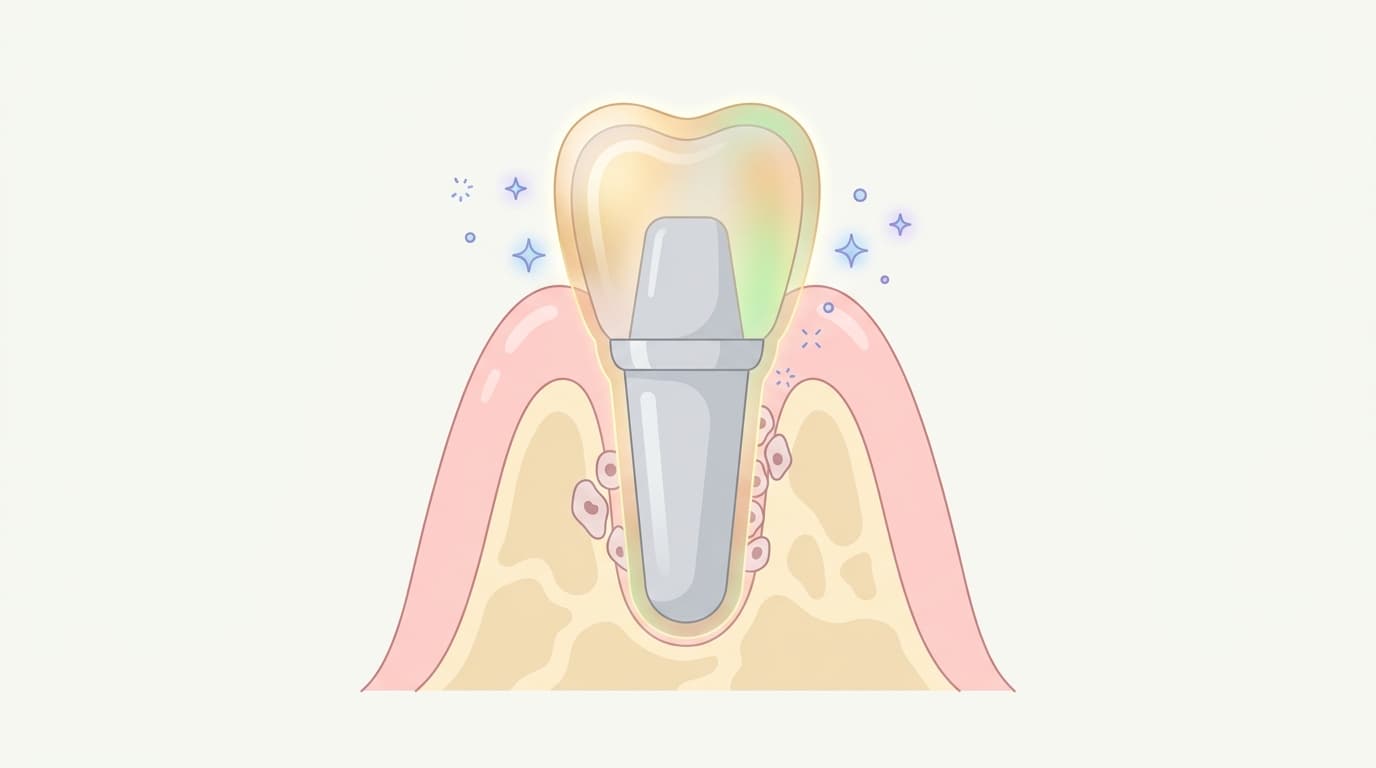
One in four people who get a dental implant eventually develop inflammation in the gum and bone around it. In a 2026 study, a joint research team from Sun Yat-sen University and Sichuan University developed a coating that needs to be applied only once to a titanium implant surface to reduce bacteria, calm the inflammatory response, and even speed up bone healing, and confirmed this through mouse experiments. Combining a polyphenol with an antibiotic-class compound, they named it the 'PA coating.'
One in Four Implants Develops Inflammation
Peri-implantitis is inflammation of the gum and bone surrounding an implant, and if it worsens, it can cause the implant to loosen or fall out. A meta-analysis published in 2025 found that peri-implantitis appears in 25% of people worldwide who have dental implants, and in 18% of implants by count. It is a far more common problem than is generally known. The research team identified the main cause of implant failure as bacterial infection combined with an excessive or misdirected immune response to it. When bacteria form a biofilm on the implant surface, the body recruits inflammatory immune cells to eliminate them, but if this response becomes excessive, it ends up eroding the surrounding bone instead. This means reducing bacteria alone cannot solve the problem; the immune response that drives inflammation must be controlled as well.
One Coating That Tackles Bacteria, Inflammation, and Bone-Healing Speed Together
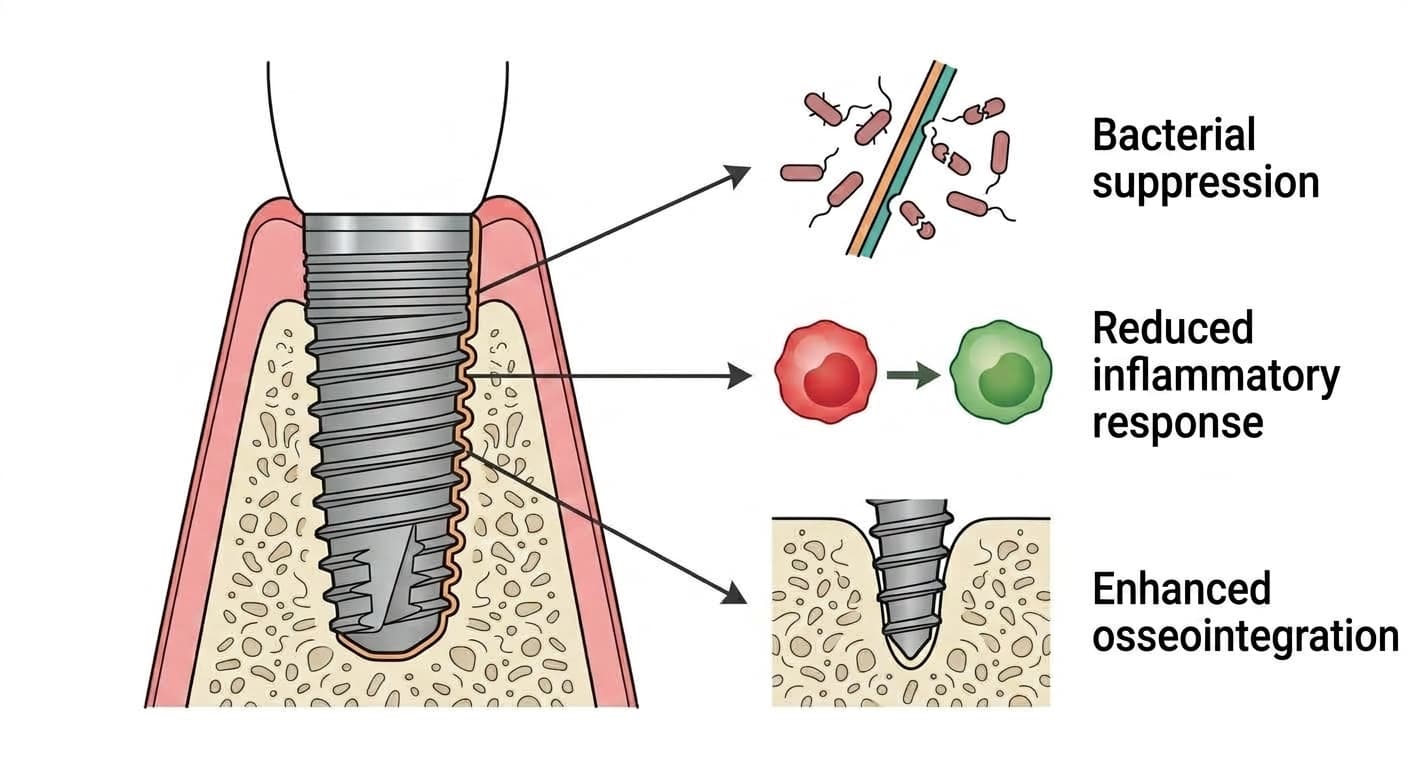
The PA coating is made by combining polyphenols, antioxidant compounds common in plants such as green tea, with an aminoglycoside-class compound used as an antibiotic. It can be applied to the surface of titanium and other implant materials in a single step, making the manufacturing process simple. In implants placed in mice, the coating directly suppressed bacteria and shifted the direction of the immune response, increasing tissue-repairing M2 macrophages in place of wound-aggravating M1 macrophages. It also restored the balance between reactive oxygen species and antioxidants in the body. As a result, bone-forming stem cells differentiated into bone-building cells more readily, and osseointegration, the bonding between the implant and bone, grew stronger. The key finding here is that the coating did more than just kill bacteria; it changed the environment in which the body accepts the implant.
A Different Niche from Other Surface Technologies
Several approaches to treating implant surfaces already exist. Photofunctionalization research conducted by a UCLA team uses ultraviolet light before implant placement to remove organic material from the surface so it bonds better with bone. After inflammation has already developed, treatments that reduce bacteria with laser or photodynamic therapy have been studied, but much evidence suggests their effect is only comparable to antibiotics. The PA coating sits between the two: it is applied at the time the implant is placed, positioning it as a preventive measure that lowers risk before inflammation ever develops.
Still Mouse Studies: Steps Remain Before Human Use
These results come from animal experiments in mice, so whether the same degree of antibacterial effect and improved osseointegration appears in the human body still needs to be confirmed separately. Whether the coating holds up over time in real clinical settings, and whether it performs the same way when manufactured at scale, are tasks for the next stage. Even so, this study is significant in that it expands implant surface management beyond simply killing bacteria, toward designing for the body's immune response and bone formation together.