
Why It Comes Back Even After You Kill It
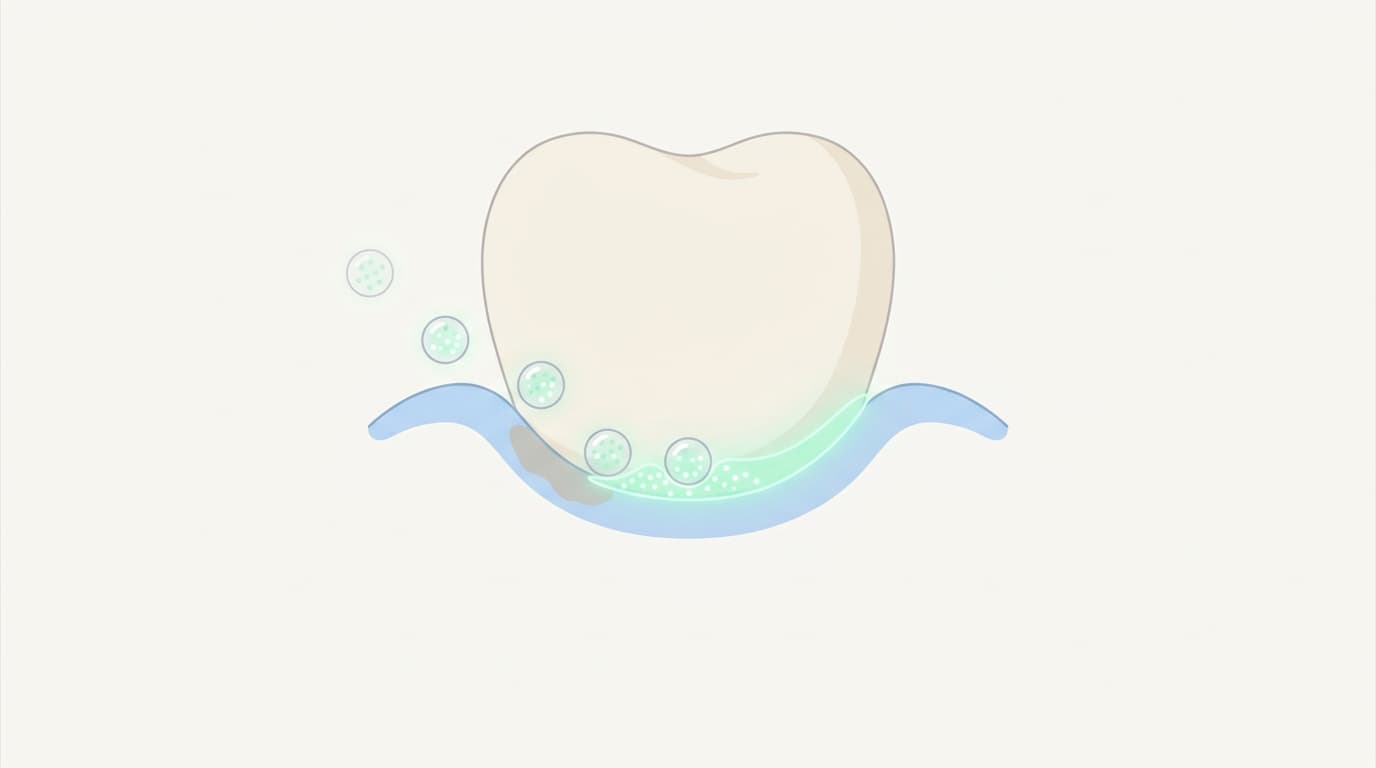
More than 700 species of bacteria naturally live in the mouth, forming a thin film. The standard approach so far has been to wipe out this balance once it tips toward periodontitis-causing bacteria, using antimicrobials or antiseptic mouth rinses. The problem is that antimicrobials reduce beneficial and harmful bacteria alike, without distinction. Once an empty niche is left behind, the community that was already dominant there tends to move back in first, and the disease often recurred even after repeated treatment. Studies such as one that uses salivary bacteria to gauge how far periodontitis has progressed or bacteriophage therapy that selectively kills periodontitis-causing bacteria also only read the broken balance or thin out the pathogens; neither addressed what should fill the empty niche.
Beneficial Bacteria Packaged Into Capsules
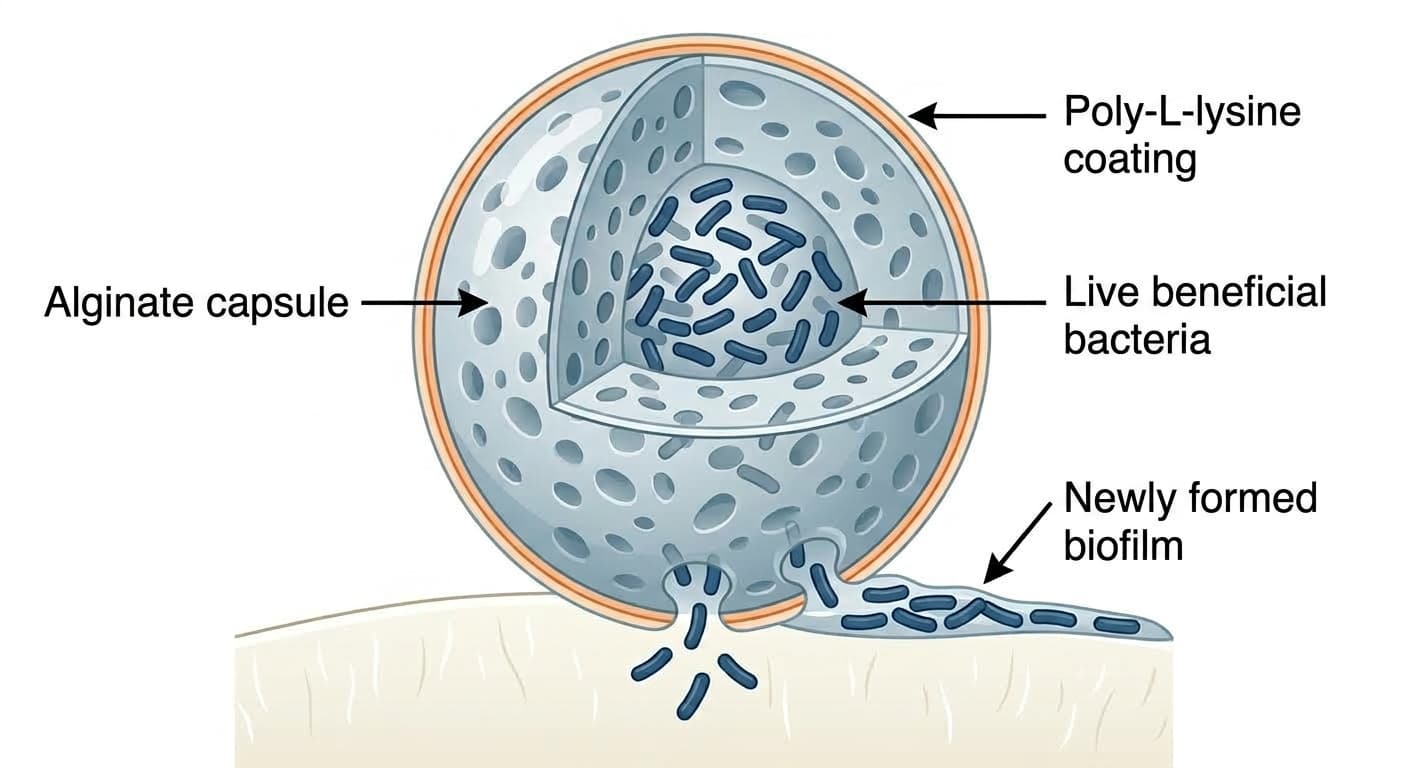
The research team selected five species of beneficial bacteria commonly found in healthy gums and sealed them alive inside capsules made of alginate, a seaweed-derived gel also used in dentistry as an impression material. The capsule surface was coated once more with a substance called poly-L-lysine to help it stick well to saliva-covered surfaces. When these capsules were passed through an environment resembling flowing saliva, the bacteria released from the capsules settled on the surface and formed a new film. The makeup of the newly formed film could also be tailored as intended, depending on which bacteria were packaged into the capsules.
It Took Hold Even Where Harmful Bacteria Already Were
What matters is that the beneficial bacteria from the capsules formed a new film even when a bacterial community that already included harmful bacteria had established itself on the surface. The team also added Lactobacillus reuteri, a type of lactic acid bacteria used in products like yogurt, and ran an experiment simulating conditions after scaling out a gum pocket. This combination reduced the number of harmful bacteria and shifted the immune response in a direction that calmed the inflammation-driving reaction. That said, these results come from an experimental setup filled with artificial saliva, and no experiments in animals or humans have been conducted yet.
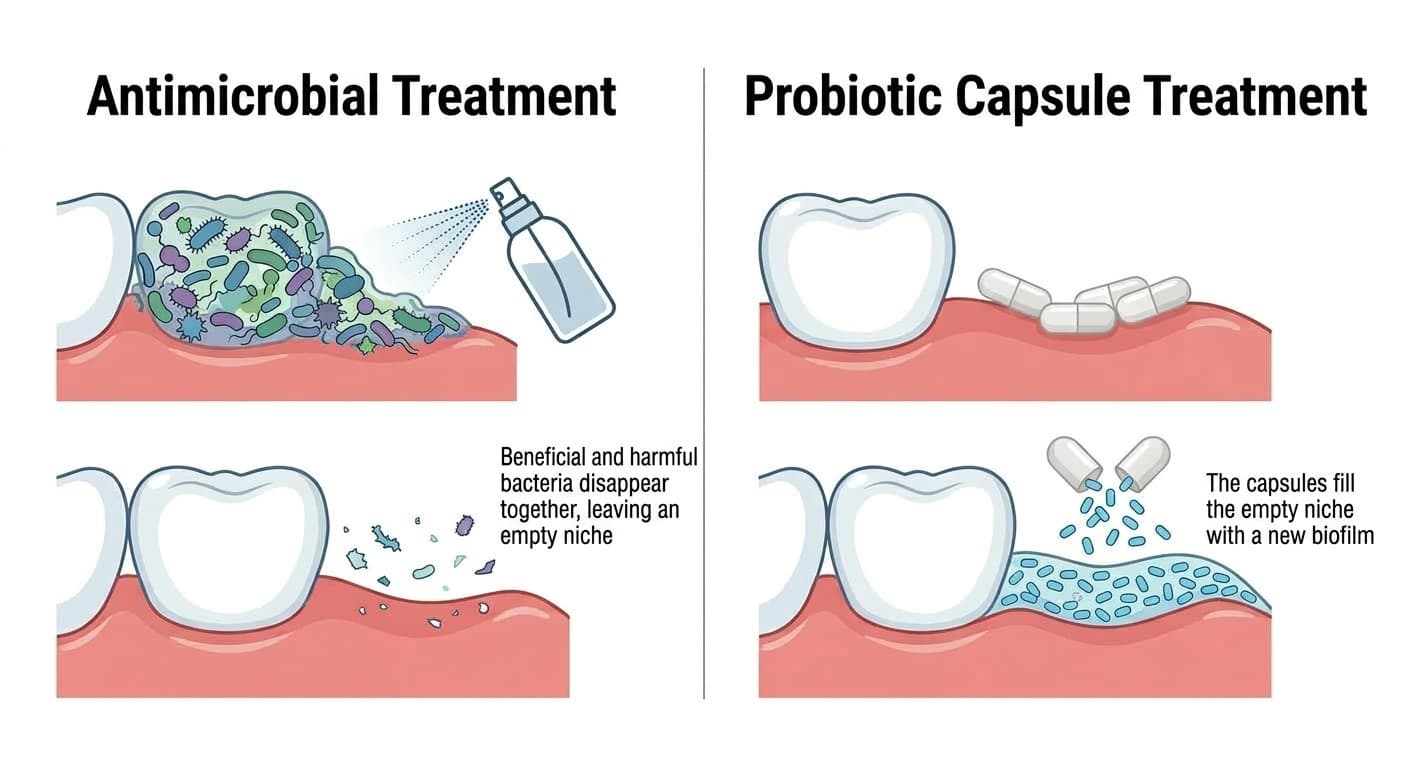
The research team describes these results as a stepping stone from treatments that eliminate bacteria toward treatments that transplant beneficial bacteria. In effect, they showed that, at least within the lab, it is possible to fill the space cleared by antimicrobials with beneficial bacteria packaged in capsules, rather than leaving it empty.