
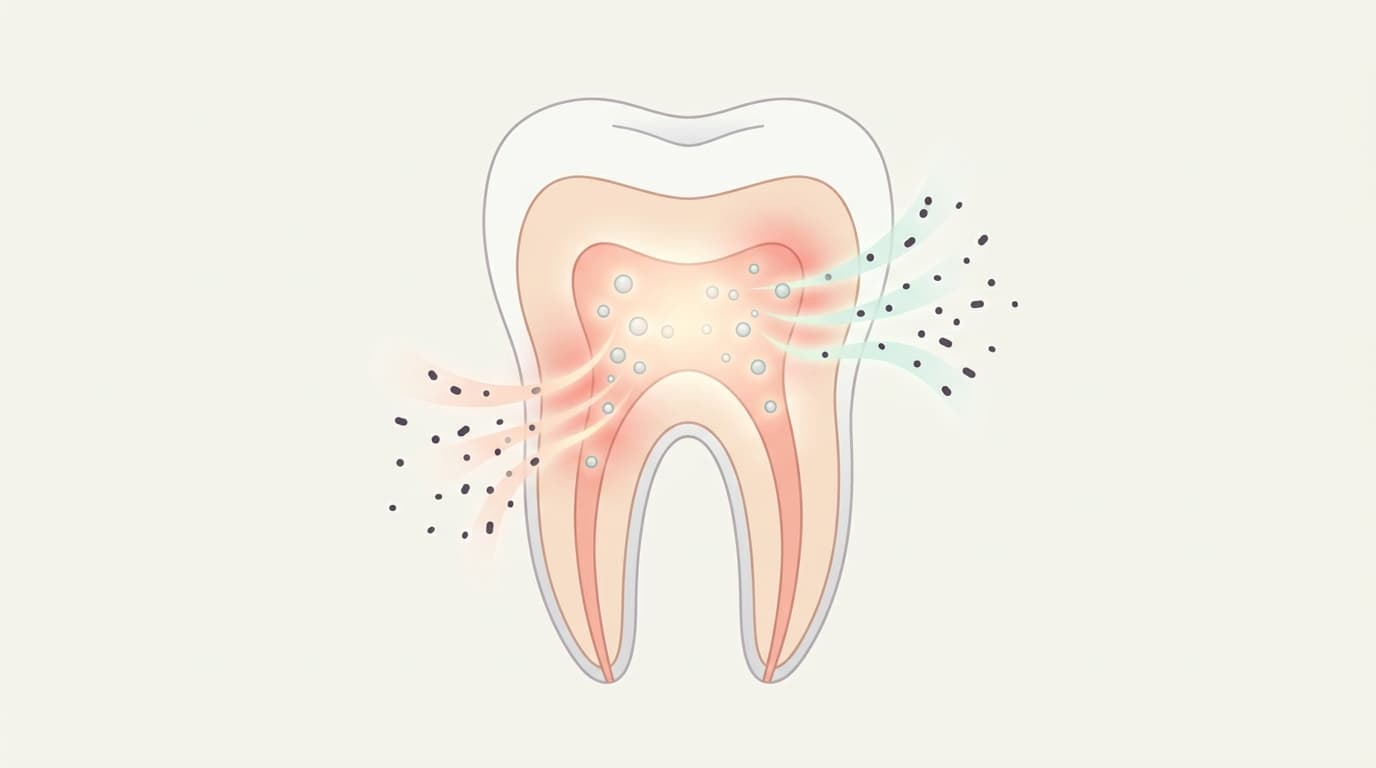
When a tooth's nerve (the pulp) becomes exposed, the materials dentistry has used so far have done little more than seal the site and wait for time to pass. Recent studies from research teams at Wuhan University in China and Osaka University in Japan have each added the ability to suppress bacteria and calm inflammation to these materials. The approach uses bioactive glass (a glass material that bonds chemically with body tissue) that slowly releases specific metal ions. It is still at the animal-testing stage using rats, but it points to the direction that pulp-preserving materials are heading.
So Far, Materials Have Simply Sealed the Gap and Waited
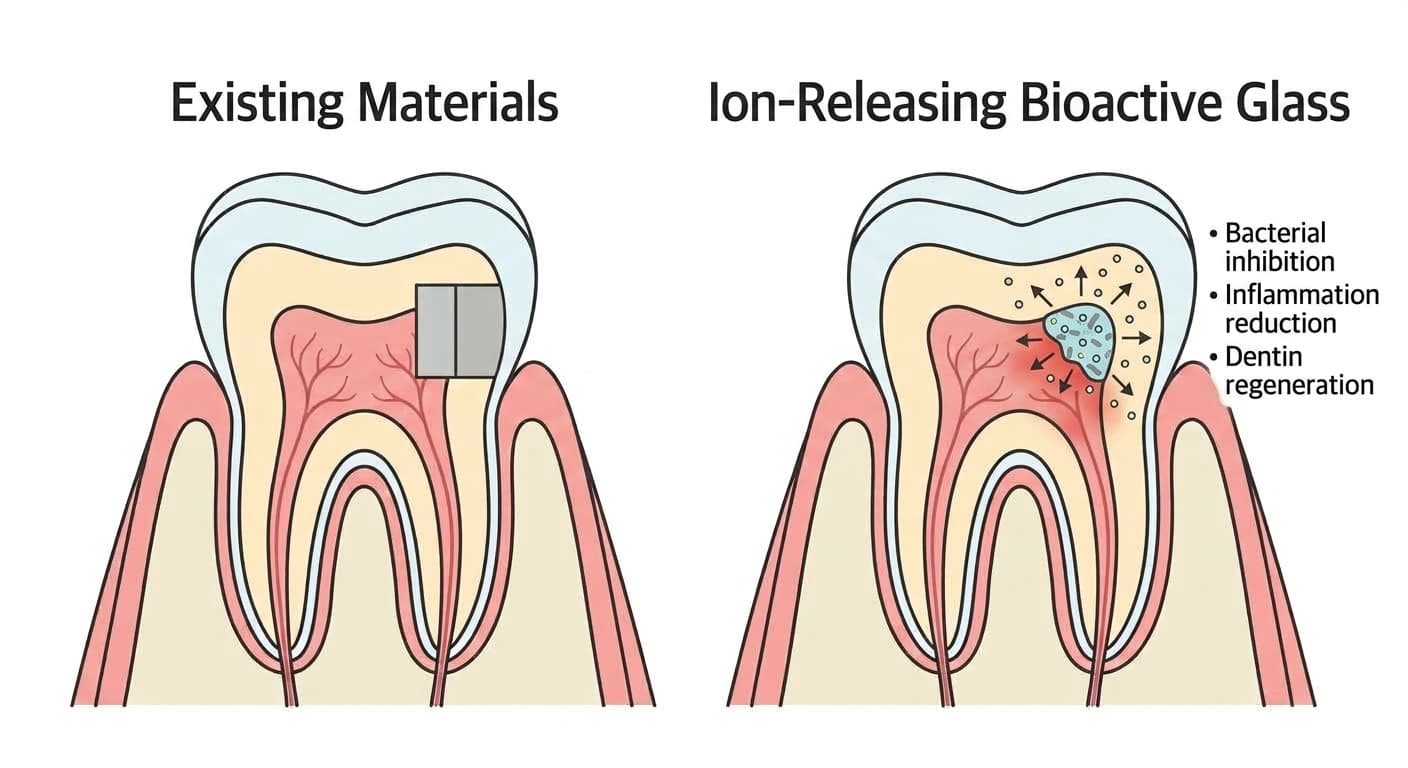
These materials are used in vital pulp therapy, a treatment applied when the pulp is exposed by decay or trauma but still alive, aiming to preserve the remaining pulp instead of removing the nerve entirely. A material is placed over the exposed site to block further bacterial invasion and to encourage dentin to form again underneath it.
The regenerative endodontic treatment covered in a study that attempted pulp regeneration using a material that slowly releases oxygen and glucose was already about building new tissue inside a tooth whose nerve had died. Vital pulp therapy is different: it preserves pulp that is still alive, so the condition of the tissue the material encounters is fundamentally different.
So far, the materials used for this purpose have narrowed down to three: calcium hydroxide, MTA, and Biodentine. A recent synthesis of clinical studies shows a clear gap in success rates. Calcium hydroxide varied widely across studies, from 37.5% to 99.8%, while MTA showed 80-100% success and Biodentine mostly exceeded 90%. However, all three materials stop at providing a chemical stimulus for dentin to re-form. None of them directly suppress bacterial infection or calm the inflammatory response.
Releasing Ions in Sequence to Target Bacteria and Inflammation Together
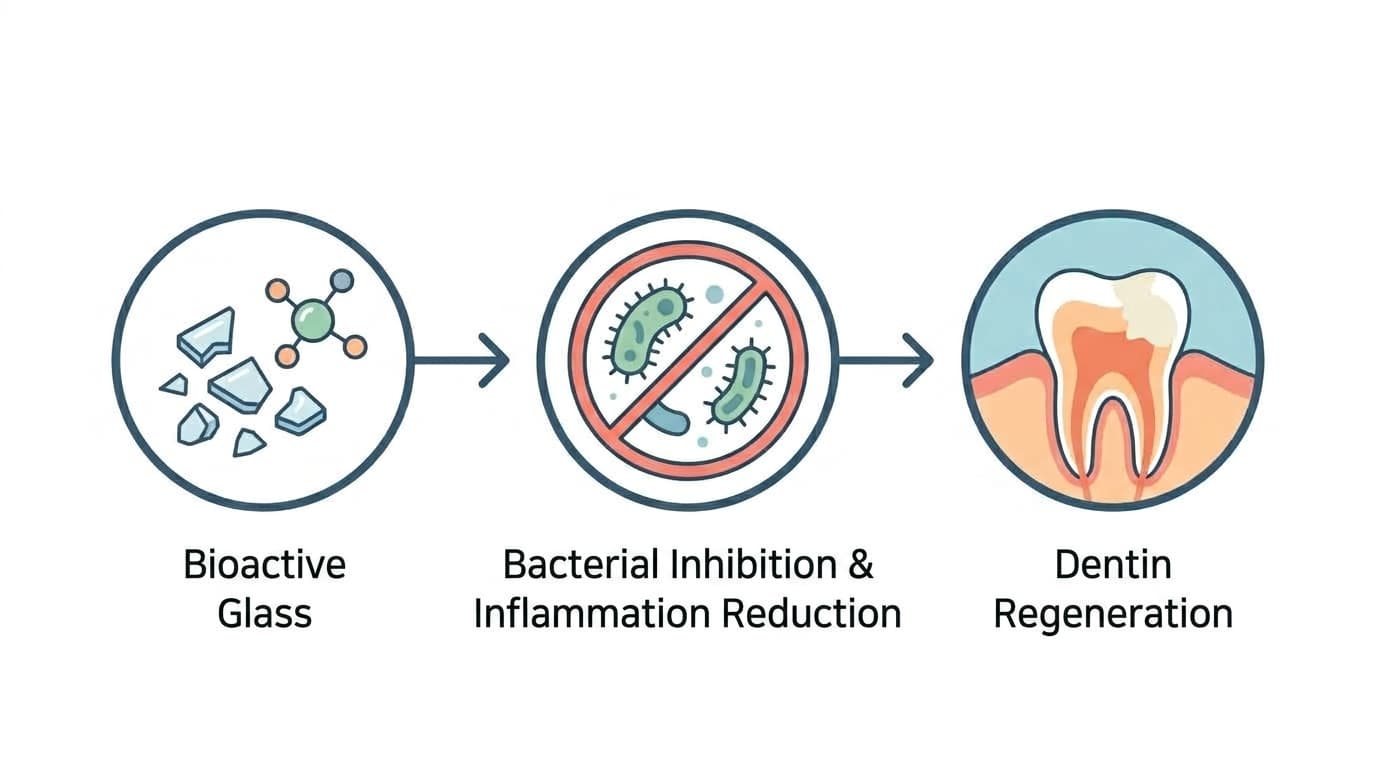
A Wuhan University research team created gallium-doped bioactive glass nanoparticles. Their structure, dense with microscopic pores, releases gallium ions over an extended period. These ions suppress the proliferation of bacteria that cause root canal infection, reduce intracellular reactive oxygen species, inhibit the NF-κB signaling pathway that drives inflammation, and simultaneously activate the NRF2-HO-1 pathway that calms inflammation. In experiments where mouse pulp was exposed and then covered with this material, the pulp remained alive, inflammation decreased, and differentiation into odontoblasts (the cells that form dentin) was promoted, generating new reparative dentin.
An Osaka University research team created a bioactive glass that releases two ions, lithium and strontium, with a time lag between them. Lithium ions are released first and quickly, restoring the proliferative capacity of pulp stem cells damaged by inflammation and suppressing the expression of inflammatory markers; strontium ions then follow more slowly, driving differentiation into odontoblasts. In a rat pulpitis model, the material prevented pulp necrosis within 3 days of application, and reparative dentin formation was confirmed by day 28.
What both materials have in common is that they do more than simply cover the site: each released ion is assigned a distinct role, whether antibacterial, anti-inflammatory, or regenerative.
Still at the Mouse and Rat Testing Stage
Both studies produced results from animal experiments in mice and rats, not humans. Human pulp is larger than that of these test animals and heals at a different rate, so whether the same effects carry over needs to be confirmed separately. Moreover, MTA and Biodentine, the materials already in use, have confirmed success rates above 80% in clinical trials, so before a new material can enter actual dental practice, it still needs to build human clinical results that exceed this bar.
Still, it's worth noting that these two studies emerged independently from different countries around the same time. It suggests that pulp capping materials are shifting direction, moving beyond simply inducing dentin regeneration toward actively regulating infection and inflammation as well.