Question
While my child was playing, one of their permanent front teeth was completely knocked out, and we rushed to a dental clinic to have it replanted right away. But some dentists say root canal treatment is absolutely necessary, while others say to wait and observe first, so I'm not sure which is right. I heard that since my child is still growing, the tooth root may not be fully formed yet. Does that have something to do with it?
Short Answer
Yes, it does. The right timing for root canal treatment after a knocked-out tooth is replanted depends on how far the root tip of that particular tooth has developed, and on whether signs of infection appear at follow-up checkups afterward. In a tooth whose root tip has already closed, the nerve is unlikely to recover on its own, so root canal treatment is often started relatively early. On the other hand, in a growing child's tooth whose root tip is still widely open, there is a chance that blood vessels can regrow into the tooth and the nerve tissue can recover, so dentists may first disinfect the tooth and observe it before deciding whether root canal treatment is needed. Even in the same situation of replanting a knocked-out tooth, the explanation you hear may differ from one dental office to another depending on the tooth's stage of development and the results of follow-up observation.
Why Is That?
Why the Nerve Is Also Injured When a Tooth Is Knocked Out
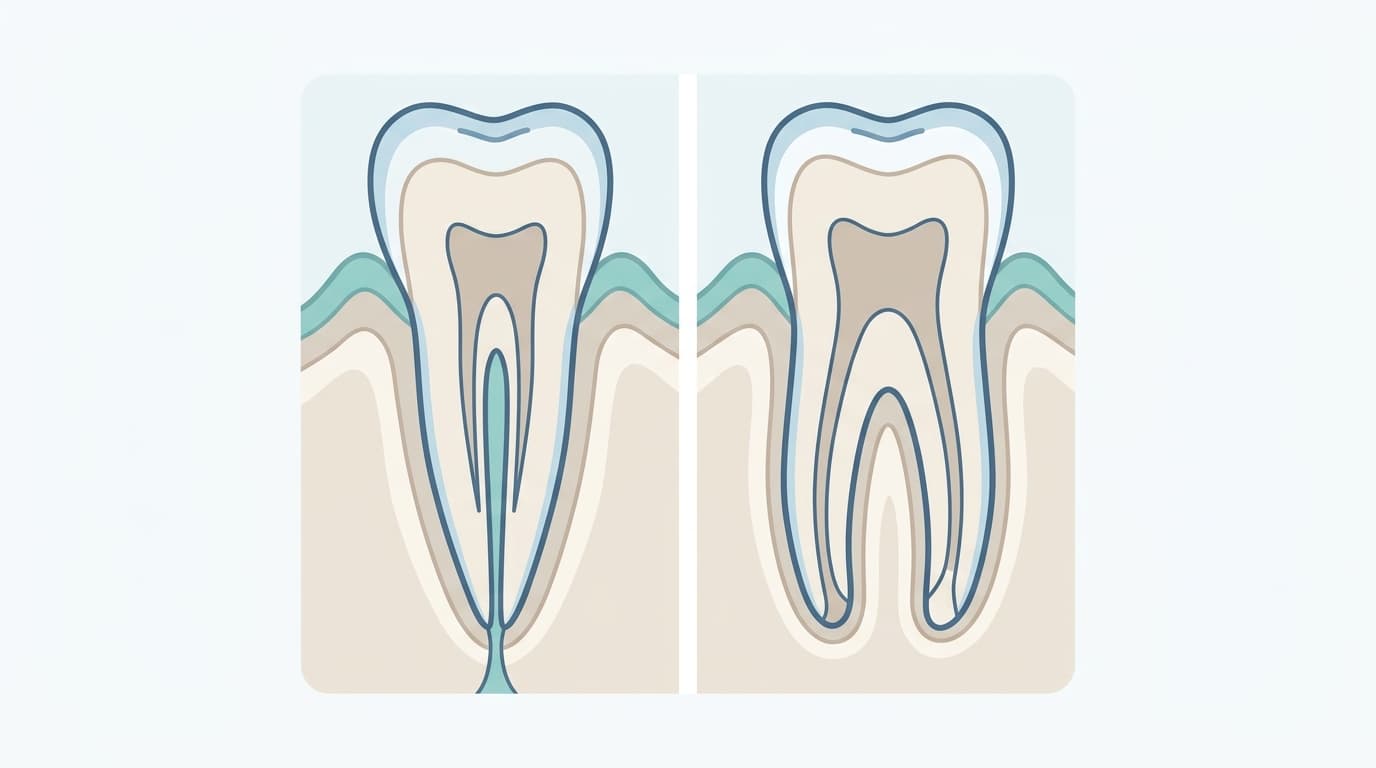
When a tooth is completely knocked out of the alveolar bone (the jawbone that holds the tooth), the periodontal ligament (the thin fibrous tissue between the tooth and the bone) that anchors the tooth to the bone is torn, and the pulp (the nerve tissue inside the tooth) is damaged along with it. Once blood flow is cut off, the pulp usually cannot recover on its own and dies; this condition is called pulp necrosis. For the nerve to recover, new blood vessels need to grow in through the small opening at the root tip (the apical foramen); if this opening is narrow, there is no passage for blood vessels to enter, making nerve recovery difficult. This is why, for a tooth whose root development is complete and whose apical foramen has closed to a narrow opening, treatment planning is often based on the assumption that the nerve is unlikely to recover after replantation.
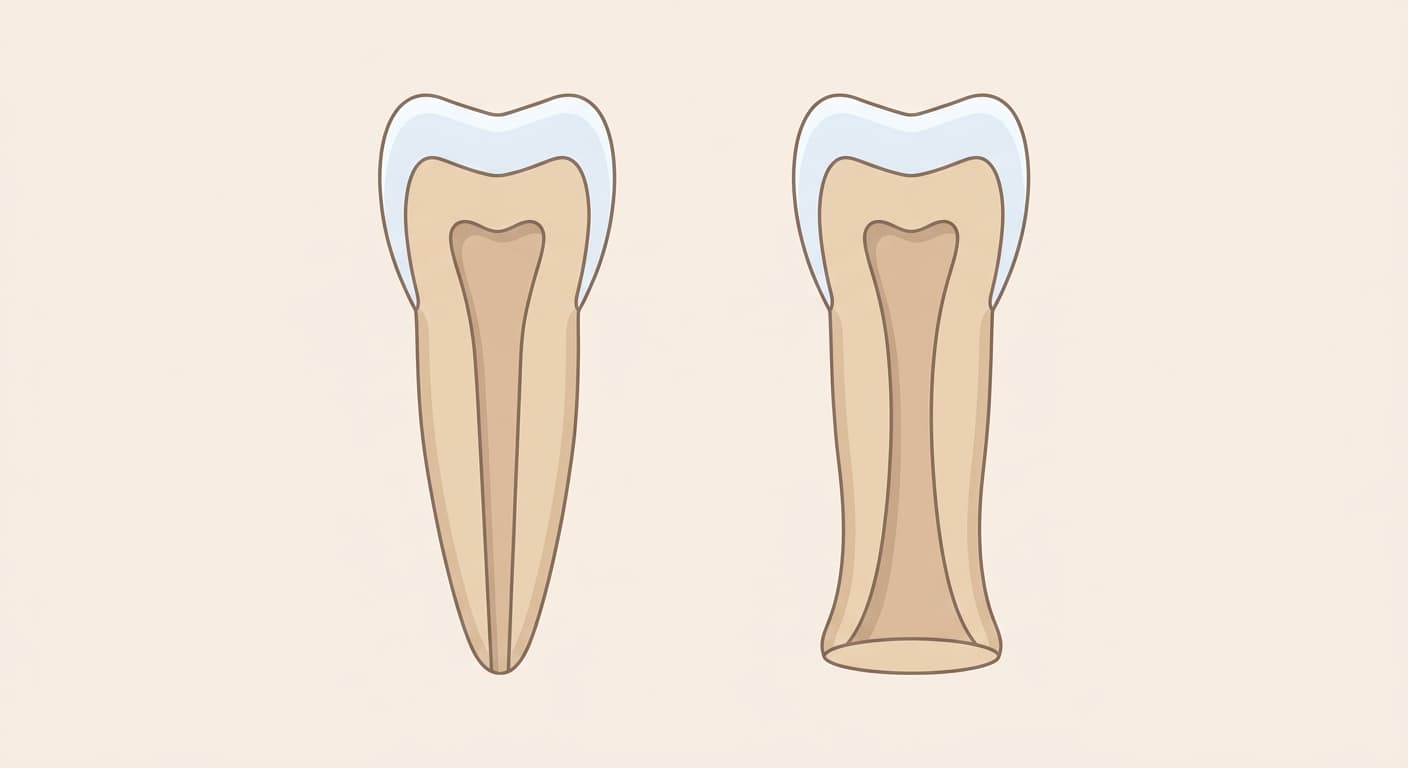
For Teeth With an Already Closed Root Tip: Why Root Canal Treatment Starts Early
If a tooth whose root development is complete is replanted quickly enough that the periodontal ligament remains viable and settles back into place, it is splinted to the adjacent teeth with a flexible appliance for two weeks. Root canal treatment begins during this splinting period, starting 7 to 10 days after the tooth is replanted. If a dead nerve is left untreated for a long time, the bacteria and necrotic tissue remaining in the root canal can worsen inflammation on the root surface, which can lead to inflammatory external root resorption, in which the root dissolves away rapidly. Rather than waiting for symptoms to become obvious, disinfecting the root canal early to block infection is the reason root canal treatment starts at this stage.
For Teeth With Still-Open Root Tips: Why Revascularization Is Tried First
In a child's permanent tooth that is still developing, the opening at the root tip is wide, leaving room for blood vessels from the periodontal ligament side to regrow into the tooth through that opening. This process, in which the nerve tissue recovers, is called revascularization. If revascularization occurs, the root can continue to develop, increasing in both length and thickness, so for a tooth whose root has not yet fully formed, there is reason to try revascularization before root canal treatment. Before replanting such a tooth, the root surface may be briefly soaked in an antibiotic solution that suppresses bacterial infection before it is put back in place. However, revascularization is attempted even though inflammation may have already spread around the root tip and the nerve has died, so if there are no clear signs of regeneration after several months, treatment moves on to a procedure that artificially seals the root tip.
Why the Treatment Plan Is Adjusted Based on Signs of Infection
A replanted tooth is not checked just once and then left alone. It is monitored over the long term, at 2 weeks, 4 weeks, 3 months, and 6 months, and then every year for up to 5 years afterward. During this process, symptoms such as pain or looseness, along with changes in the bone around the root as seen on X-rays, are checked to determine whether infection is progressing. If infection is confirmed, root canal treatment is started right away at that point to remove bacteria from inside the root canal, and medication may be packed in for an extended period to suppress resorption. On the other hand, if revascularization is progressing well with no signs of infection, root canal treatment can be postponed and observation can continue. Because the same replanted tooth can lead to different judgments depending on its condition at the time of observation, it can feel as though different dental offices are saying different things at different times.