Question
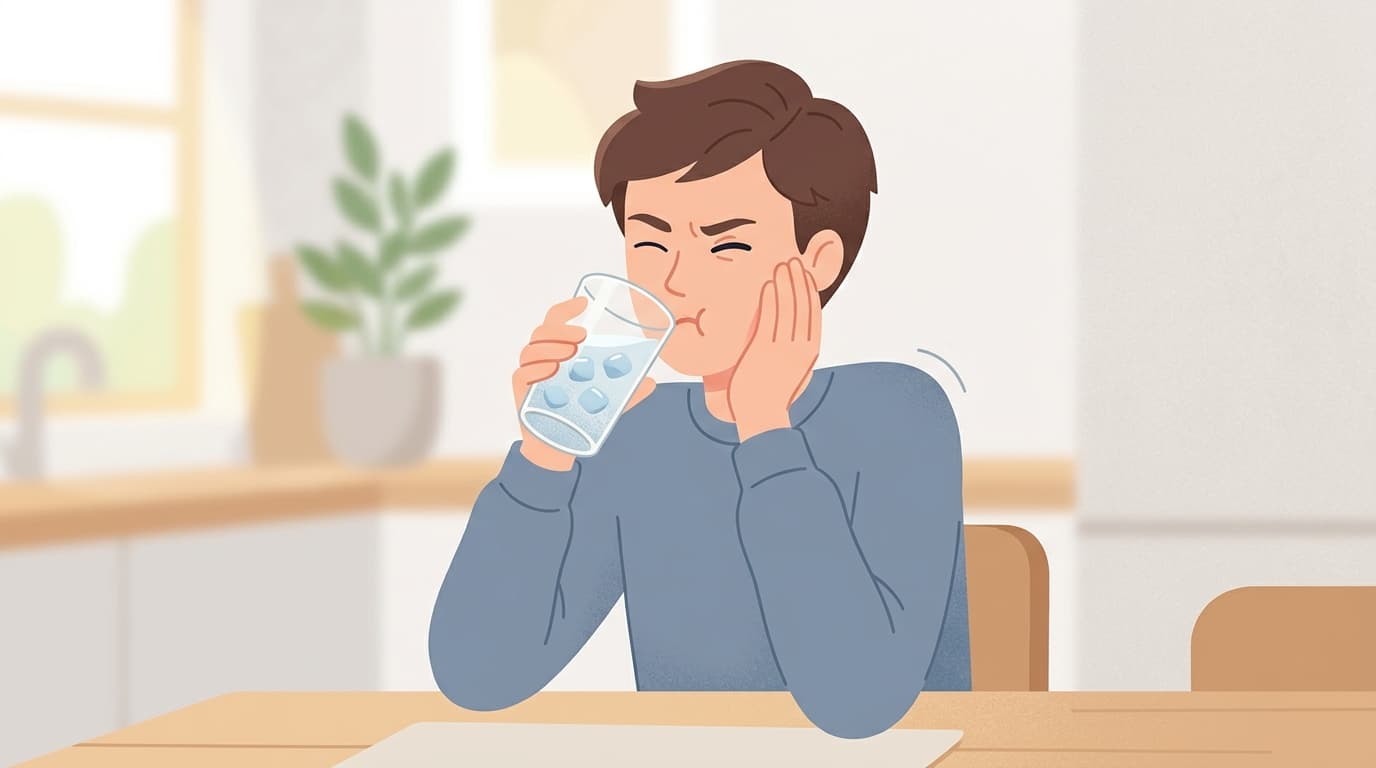
A specific tooth stings when cold water or ice cream touches it, and it's also sensitive when I brush. I don't see any dark spots or holes. There seems to be a slight dip near the gum line. Can teeth be this sensitive to cold even without a cavity?
Short Answer
Sensitivity to cold water can come from several different situations: exposed dentin, cavities, pulp inflammation, a cracked tooth, or irritation from a recent filling. Along with where the sensitivity is located, it helps to notice how long the pain lasts after the stimulus stops, whether it also hurts when chewing, and whether you've had recent dental work. Depending on the cause, the solution can range from a desensitizing toothpaste or treating the exposed area, to filling a cavity, protecting a crack, or pulp treatment.
Why Does This Happen?
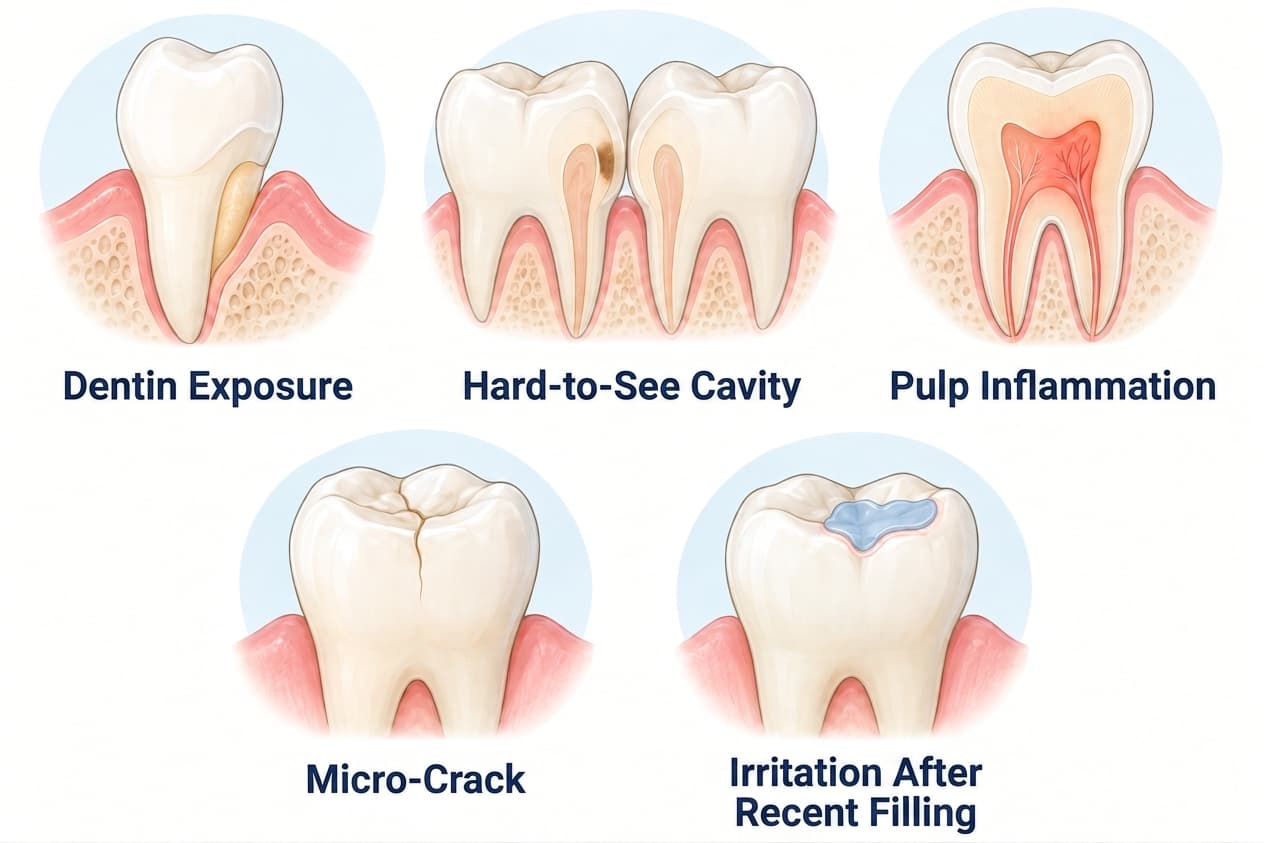
Sensitivity to cold water can arise from several different causes. Looking at when the pain occurs, how long it lasts, and whether the tooth is damaged helps distinguish between them.
Inside a tooth, the dentin contains very fine tubules. When these tubules are exposed and cold water or a toothbrush touches them, the fluid inside the tubules moves and can trigger pain. Inflammation of the pulp beneath the dentin can also make a tooth sensitive to cold. In other words, the same word "sensitive" can point to several different causes.
If There's a Dip Near the Gum Line or Exposed Root
When the gums recede or the tooth surface wears down and dentin becomes exposed, cold water or a toothbrush can trigger a short, sharp sting. This pattern is called dentin hypersensitivity. A dip near the gum line can also result from a combination of factors, including friction and acid-related wear.
For dentin hypersensitivity, a desensitizing toothpaste that lowers nerve sensitivity or blocks the exposed tubules can help, and a dentist can also apply treatment to seal the exposed tubules. If the dip is large or the sensitivity doesn't ease enough, filling the lost area with resin or glass ionomer may also be considered. It's also worth reviewing brushing habits or acidic food habits that keep irritating the tooth surface.
If There's a Cavity in a Hard-to-See Spot
Cavities that start between teeth can be in spots that are hard to check with a mirror. At the dental office, the tooth surfaces are examined, and if needed, an X-ray that shows the spaces between teeth is reviewed as well.
If irritation from a cavity causes mild inflammation of the pulp, it can briefly hurt with cold or sweet foods. In this case, treatment considers removing the cavity and the source of irritation, then restoring the tooth appropriately to help the pulp recover.
If Pain Lingers After the Cold Is Gone
Pulpitis is inflammation of the tissue inside a tooth. Mild inflammation can recover once the irritating cause is removed, but when the inflammation is more severe, the pain can continue even after the stimulus is gone, or the tooth may ache even at rest.
At the dental office, the response to cold stimulation and how long it lasts, along with other symptoms and test results, are used together to assess whether the pulp can recover. Based on this, the scope of treatment is decided: from removing the cause and restoring the tooth, to root canal treatment.
If a Specific Spot Stings When Chewing, Too
A tooth with a micro-crack can be sensitive to cold and also cause a sharp pain when biting down on a specific spot or releasing the bite. Because a crack may not be easy to see with the naked eye, dentists check for it with a bite test on specific areas or by shining a light through the tooth.
The restorative approach to protect the tooth is chosen based on the extent of the crack and the condition of the pulp. The tooth may be temporarily covered and protected while symptoms are monitored before final restoration, or if the pulp has also been affected, pulp treatment may be considered alongside it.
If the Tooth Recently Had a Resin Filling
After a resin filling, sensitivity can appear because of shrinkage as the material sets, tiny gaps, or dentin that wasn't fully sealed. In this case, the seal of the filling and the pulp's response are checked. If it also hurts when chewing or the treated tooth feels like it touches first, the bite contact is checked as well.
Changes such as whether the sensitivity is easing or whether pain starts even without a stimulus are useful information for deciding the treatment direction at the next visit.