Question
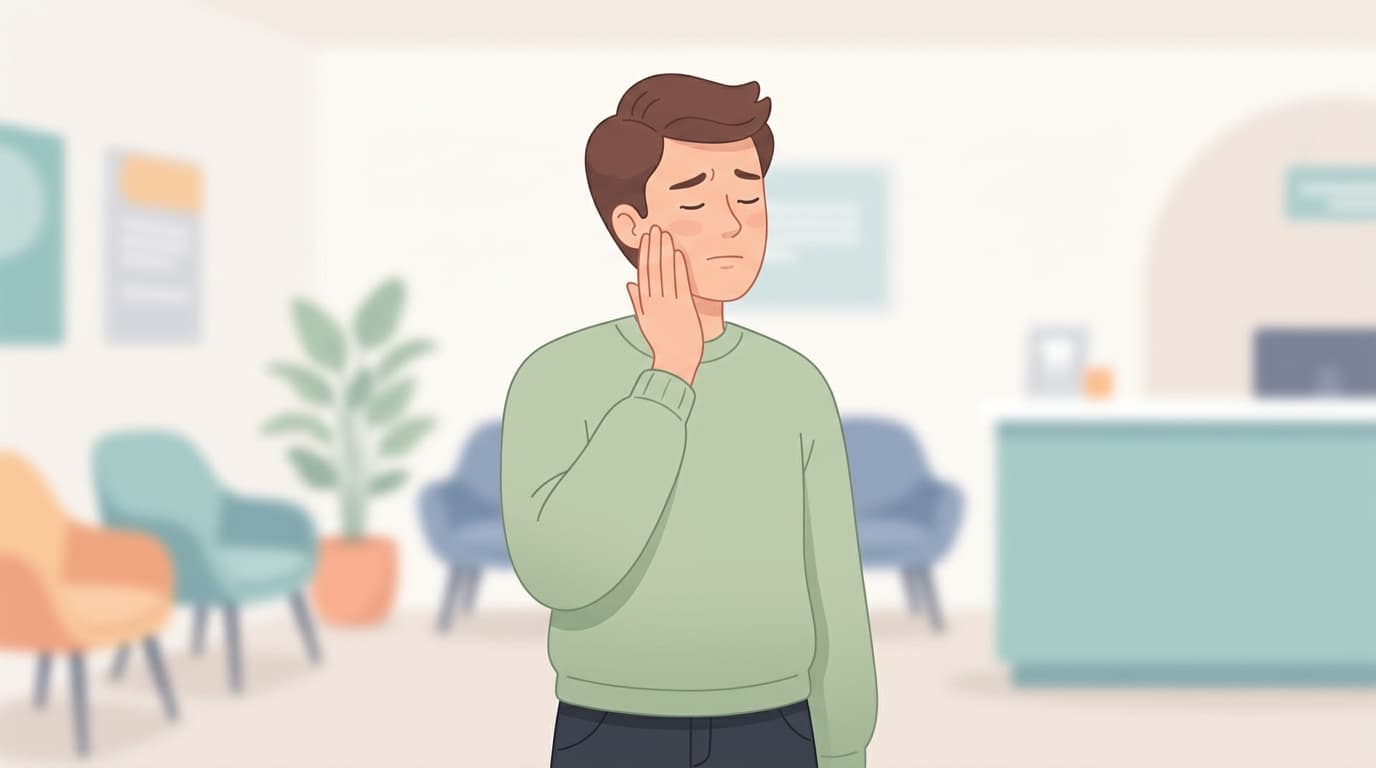
After a deep cavity is filled with composite resin, many people worry that ongoing sensitivity means the treatment will have to go all the way to a root canal. They have heard that some sensitivity right after treatment is normal, but they want to know where that normal process ends and where the point is that calls for another dental check.
Short Answer
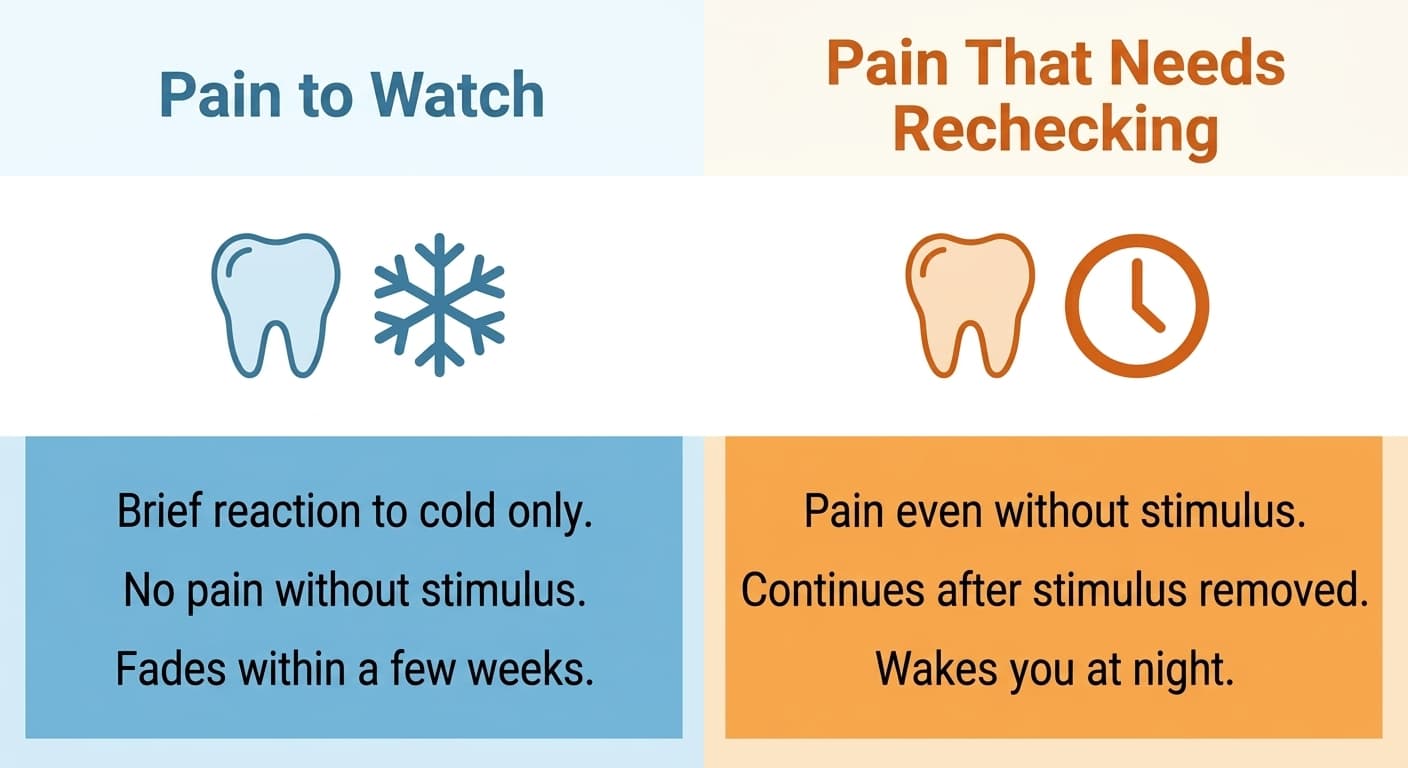
Sensitivity after a resin filling by itself does not tell you whether a root canal is needed. What matters is the pattern of the pain. A brief, sharp reaction only to something cold, one that settles soon after the stimulus is removed, is a common reaction right after a filling, and it generally fades within a few weeks. On the other hand, if pain occurs even without any stimulus, if it continues for a long time after the stimulus is removed, or if it wakes you up at night, these are signs that the condition of the tooth's nerve (the pulp) needs to be rechecked. This judgment is not made from the pain pattern alone; it is made together with tests such as a cold test or percussion at the dental office.
Why Does This Happen?
Why the filled area feels sensitive
Composite resin undergoes a slight decrease in volume as it hardens, called polymerization shrinkage. Because of this, an invisible gap (microleakage) can form at the boundary between the material and the tooth, or tiny tubules inside the dentin (dentinal tubules) may not be completely sealed during bonding. When temperature or chewing pressure reaches these passages, the fluid inside the tubules moves slightly and stimulates the nerve, producing a momentary feeling of sensitivity. Layering the filling material or using a bonding technique that seals the tubules more thoroughly can reduce this reaction, but it is difficult to eliminate entirely.
The deeper the original cavity was, the thinner the remaining dentin between the nerve and the filling material tends to be after the decayed tissue is removed. The thinner the dentin, the more easily changes in temperature or pressure reach the nerve, so initial sensitivity can feel more pronounced than in a tooth where a shallow cavity was filled.
The difference between pain that only reacts to a stimulus and pain that arises on its own
When the tooth's nerve develops localized inflammation from a mild irritant, this is called pulpitis. Within this, a state in which the inflammation can subside and return to normal once the cause is removed is called reversible pulpitis. It reacts sharply to cold or sweet stimuli, but the reaction disappears as soon as the stimulus is removed, and it does not cause pain on percussion or pain that occurs on its own. This is the reaction commonly seen in the first few days to a few weeks after a restoration, and it typically fades naturally over about two to three weeks.
By contrast, a state in which the inflammation does not recover even after the irritant is removed, and instead continues, is called irreversible pulpitis. This is suspected when pain occurs without any particular stimulus (spontaneous pain), when the tooth reacts not only to cold but also to hot stimuli, when pain continues for minutes to hours even after the stimulus is removed, or when a throbbing ache at night is strong enough to wake you. In this case, rather than waiting for the nerve to recover on its own, the tooth is rechecked at the dental office to determine whether root canal treatment is needed.
If a tooth hurts specifically when you bite down but shows little reaction to temperature, the cause may not be nerve inflammation but rather a bite that is not properly aligned (the chewing surface sitting too high). This situation is covered separately in the explanation on occlusal adjustment.
How this is checked
At the dental office, the dentist does not stop at asking about the pattern of pain; several tests are considered together. A cold test applies a brief cold stimulus and observes the reaction: a sharp reaction that fades quickly suggests a recoverable state, no reaction at all raises the possibility that the nerve has died, and a dull pain that continues for a while suggests inflammation that is unlikely to recover. Electric pulp testing checks whether the nerve responds to an electrical stimulus, but the result can be inaccurate depending on any crown material or recent treatment history, so this test alone is not used to determine the condition of the pulp; it is combined with a cold test, percussion testing (tapping on the tooth), and imaging if needed.
If the tooth is in an area that bears a lot of chewing force, a fine crack is also worth examining. When a crack extends into the dentin, it tends to show up as a sudden, sharp pain on biting rather than a reaction to temperature, so the situation in which the pain occurs can itself be a clue that points away from nerve inflammation.