
Question
My child has a deep cavity in a baby tooth that looks like it's about to fall out on its own. It's a bit uncomfortable for them to chew with that tooth, and the dentist recommended root canal treatment (pulp therapy). Since the tooth will naturally fall out within a few months anyway, I'm wondering whether root canal treatment is really necessary, or whether it would be simpler to just extract it now.
Short Answer
Being close to its natural exfoliation date alone doesn't determine whether root canal treatment is needed. Dentists weigh several factors together to choose between root canal treatment and extraction: whether the inflammation caused by the cavity is confined to the pulp near the crown (coronal pulp), or has spread to the pulp in the root (radicular pulp) or even its tip; how far the tooth's natural root resorption process has progressed; and whether enough tooth structure remains to place a crown afterward. If the inflammation is mild, pulp-preserving treatment may be considered. If only the coronal pulp is infected, a treatment that removes just that portion may be chosen. If the infection has spread into the root or the tooth is severely damaged, the options shift toward treatment that removes the pulp down into the root, or extraction.
Why Is That?
How Far the Inflammation Has Spread Comes First
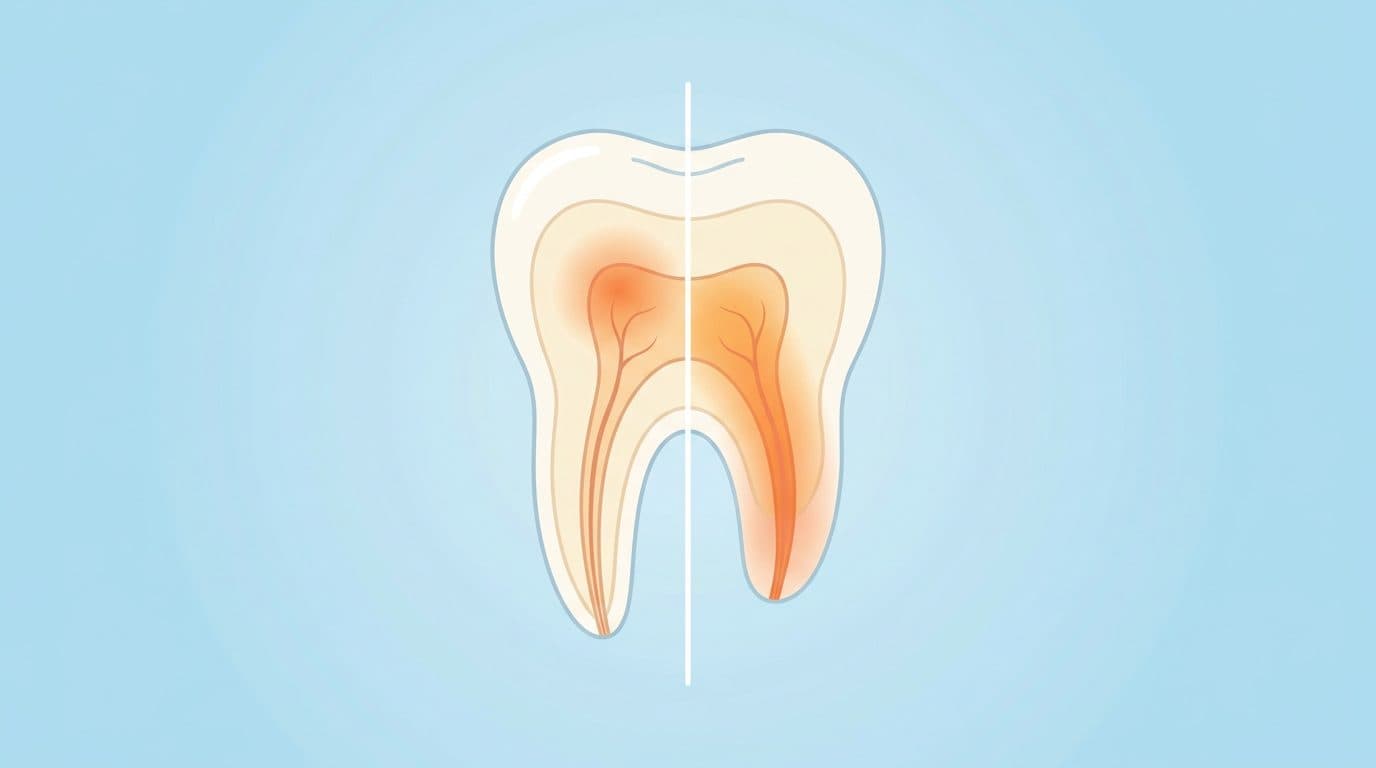
Inside a baby tooth, there is coronal pulp near the tooth's outer surface and radicular pulp that extends down into the root. When a deep cavity causes inflammation in this nerve (pulp) tissue, the treatment approach depends on how far that inflammation has spread.
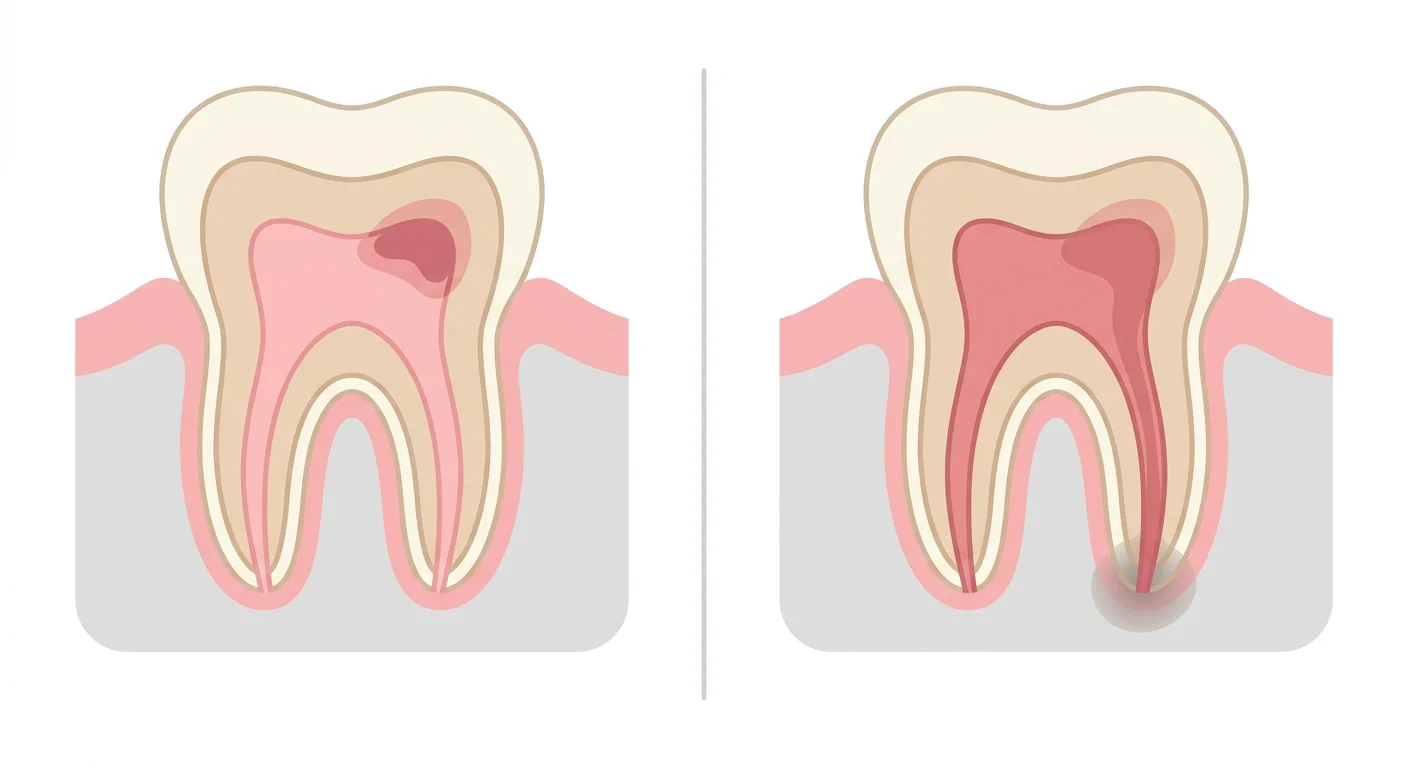
If the inflammation is mild, the tooth only reacts briefly to cold, and there's no spontaneous pain, pulp-preserving treatment can be considered. Covering and sealing the pulp with an appropriate material can keep it vital, and this type of treatment is reported to have a success rate above 90%.
If the inflammation has worsened to the point of infecting the coronal pulp but the radicular pulp is still healthy, the treatment of choice is pulpotomy, which removes only the coronal pulp and leaves the radicular pulp in place. However, if the pulp has already died or an inflammatory lesion has formed at the root tip, pulpotomy is unlikely to fully resolve the problem and isn't recommended. In that case, the choice is between pulpectomy, which removes both the coronal and radicular pulp (often called nerve removal), or extraction.
One important caveat here: the disappearance of pain doesn't mean the inflammation has improved. If the pulp dies completely, the tooth may stop feeling stimuli altogether, which can make the pain go away. For that reason, dentists don't judge based on pain alone, but also review X-rays, pulp vitality tests, and other findings together.
How Far Root Resorption Has Progressed Is Also Considered
As the permanent tooth growing underneath pushes upward, the root of the baby tooth naturally dissolves and shortens over time, a process called root resorption. As resorption nears completion, the baby tooth becomes loose and eventually falls out. The pattern of this resorption differs between front teeth and molars, and how much root remains is checked with an X-ray.
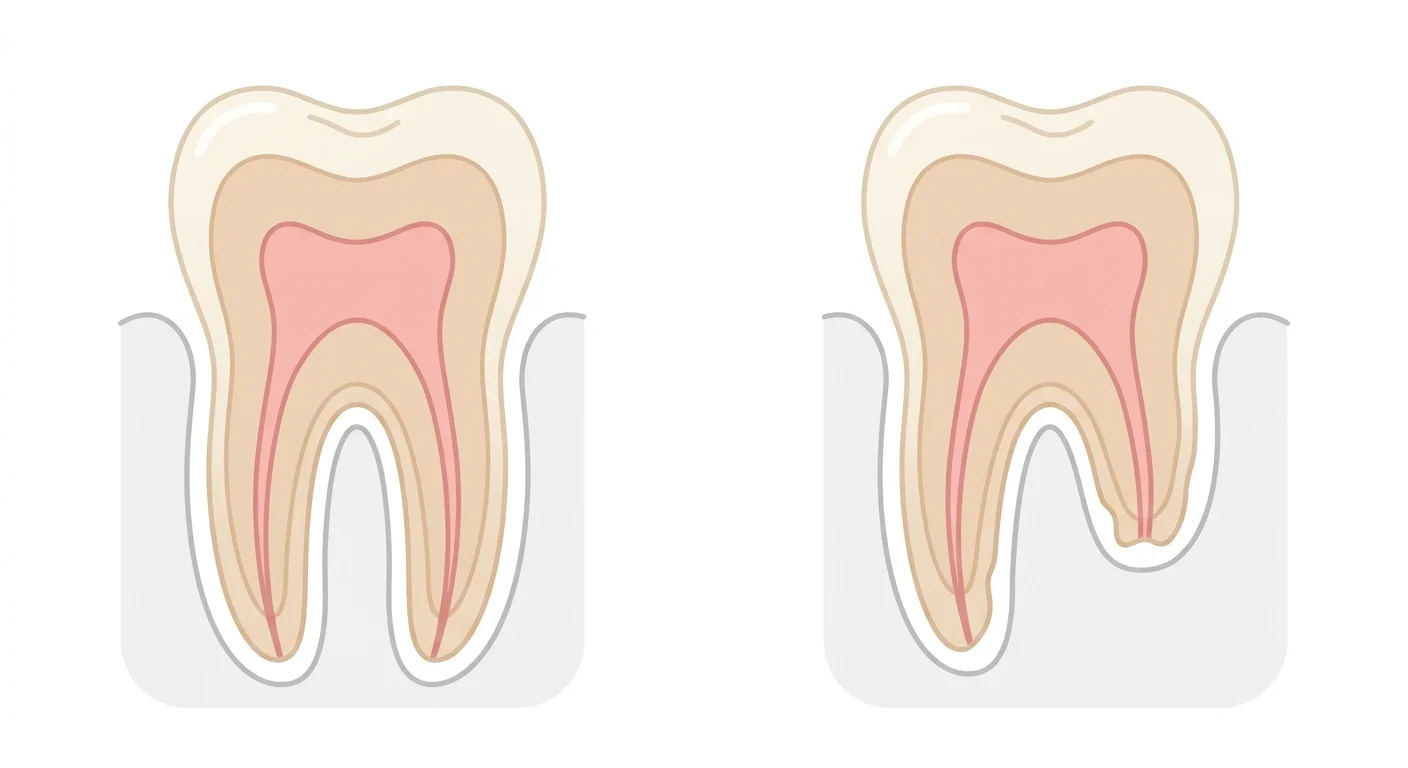
Baby teeth that have had root canal treatment have been reported to undergo faster root resorption than the corresponding tooth on the opposite side, leading to earlier exfoliation. This means that even when root canal treatment keeps the tooth in place, the natural exfoliation date may end up slightly earlier, and this is considered a normal part of the process. Dentists use X-rays to assess the remaining root length and degree of resorption, along with how developed the permanent tooth underneath is, to decide whether root canal treatment or extraction is the better choice. Even when extraction is necessary, it's important not to damage the developing permanent tooth bud underneath.
Whether Enough Tooth Structure Remains for a Crown Afterward Also Matters
After a baby tooth has had the coronal or radicular pulp removed, the space where the pulp was is filled with material and the tooth is typically finished with a metal crown known as a stainless steel crown. Even if root canal treatment itself is feasible, if the cavity has destroyed so much of the tooth's walls that not enough structure remains to place a crown, there's less reason to proceed with the treatment. Crown restoration of baby teeth is covered in more detail in Does a Baby Tooth Need a Crown After Root Canal Treatment?.
Why You Shouldn't Leave It Untreated Just Because It's Close to Falling Out
Just because a tooth will fall out within a few months doesn't mean a deep cavity can be left untreated. The reasons for that have already been covered in Does a Baby Tooth That's Going to Fall Out Anyway Still Need Cavity Treatment?. One more point worth adding here: an infection that has spread to the tip of a baby tooth's root can affect the developing permanent tooth bud underneath. If the infection damages the cells that form the permanent tooth's enamel (the hard outer layer of the tooth), discoloration or defects can remain on the surface of that permanent tooth once it erupts.
If the infection spreads further, it can lead to acute infection symptoms such as spontaneous pain along with swelling of the gums or cheek. If these symptoms appear, the tooth should be checked at the dentist right away, regardless of how close it is to falling out. Swelling that appears after treatment is covered in If My Child's Cheek and the Area Around the Eye Swell After Tooth Treatment, Is It Okay to Wait?.