Question
A tooth that is undergoing root canal treatment hurts when I touch it with my tongue or finger, or when I chew food on it. Treatment has already started on the nerve, so I'm wondering why this pain is still there.
Short Answer
Pain when touching or chewing is not coming from the nerve inside the tooth. It comes from lingering inflammation in the periodontal ligament, the tissue that fills the space between the tooth root and the surrounding bone. While root canal treatment is underway, bacteria and inflammatory byproducts inside the canal can irritate the tissue at the root tip and produce this kind of pain, and it usually fades gradually as treatment progresses. If the pain suddenly worsens and the gum swells, it may be an acute flare-up, so it is safer to contact the dental office rather than waiting until the next scheduled visit. Whether treatment is going well cannot be judged just by which visit the pain showed up on.
Why Does This Happen?
The Pain Originates in the Periodontal Ligament
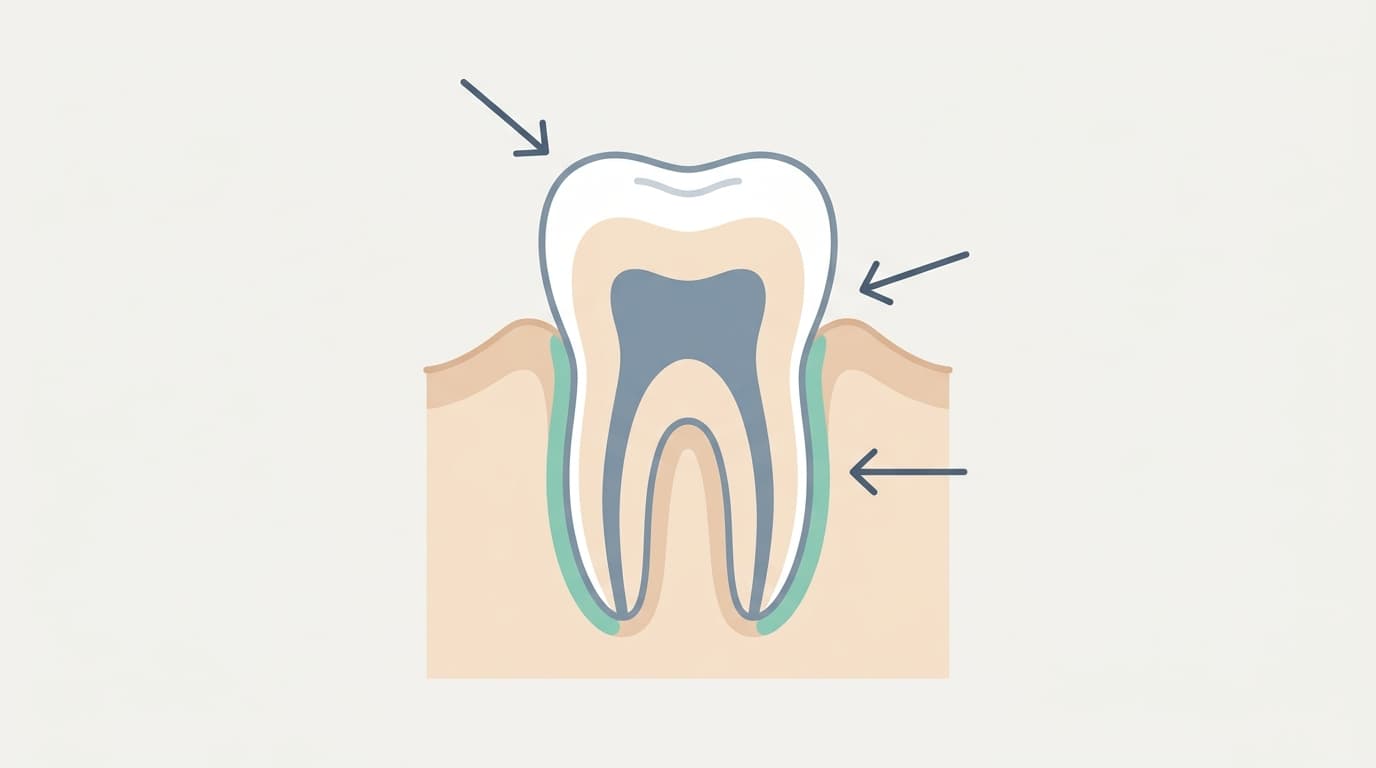
At the dental office, a response to pain is checked by gently tapping the tooth with an instrument such as the handle of a mirror (a percussion test) or by pressing on it with a finger (palpation). Pain on tapping means the periodontal ligament is inflamed, and this is not directly tied to whether the pulp (the nerve tissue inside the tooth) is still alive. This response in the periodontal ligament shows up independently of the pulp's condition, so it can still react to stimulation even while root canal treatment is in progress. The periodontal ligament is a thin layer of connective tissue that fills the space between the root surface and the alveolar bone (the jawbone surrounding the root), and it is richly supplied with sensory nerves that are highly precise at localizing pressure.
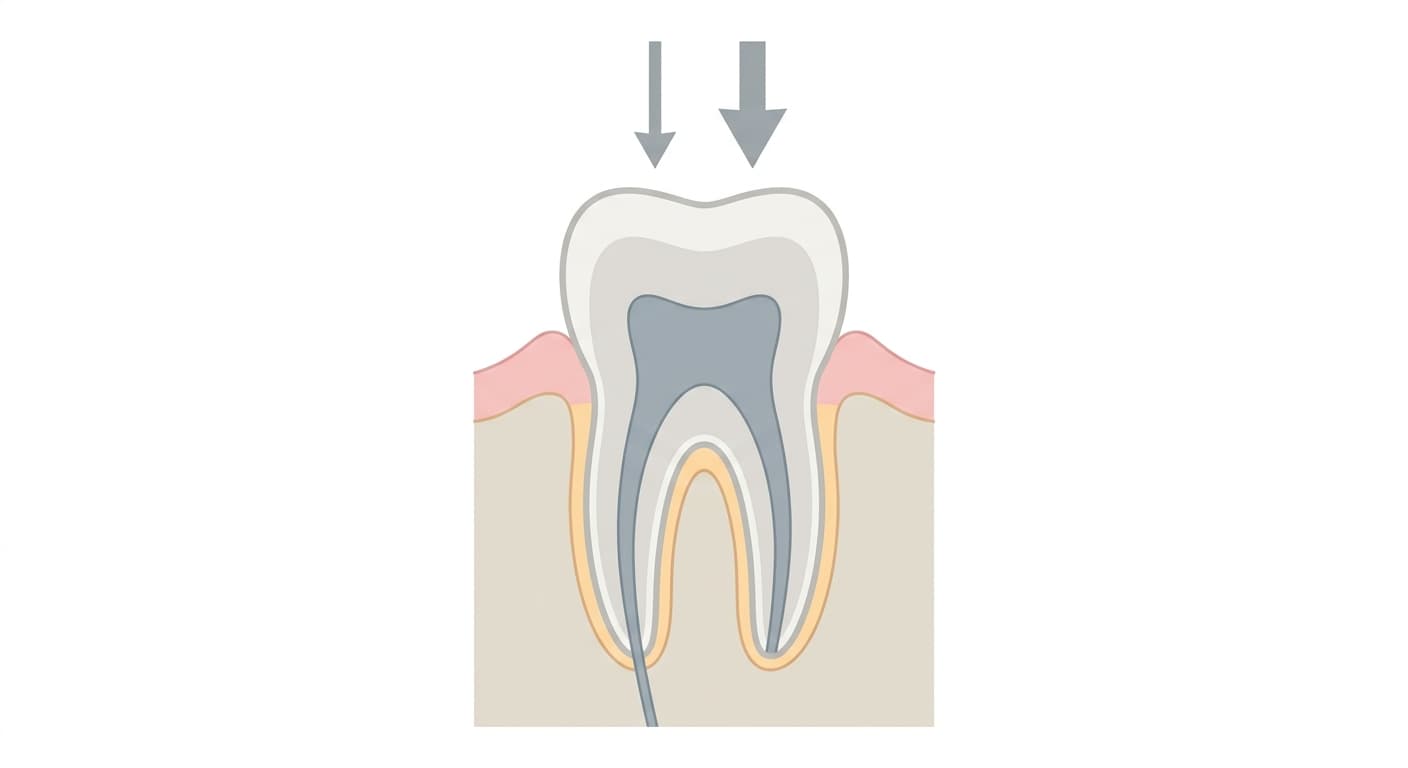
Pain when chewing is explained the same way. Pain that appears when biting down and releasing strongly suggests inflammation of the periodontal ligament. That said, if the pain on chewing is sharp, momentary, and appears only from a specific direction, it is also worth checking for a cause unrelated to the root canal treatment, such as a cracked tooth, which may be occurring at the same time.
Why This Irritation Occurs During Root Canal Treatment
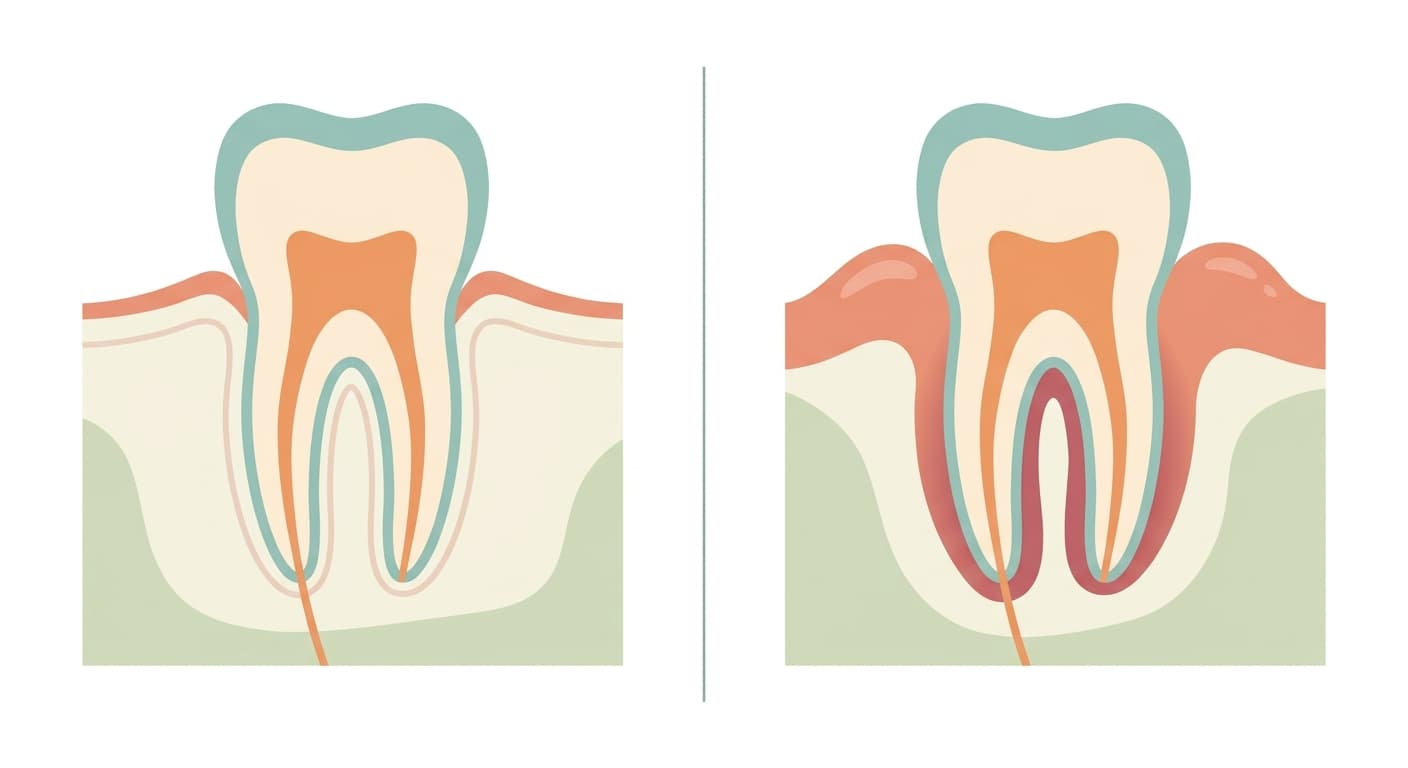
A tooth undergoing root canal treatment often starts treatment with bacteria and inflammatory byproducts still present inside the root canal (the nerve canal within the tooth root). When endotoxins from these bacteria and other inflammatory substances pass through the apical foramen (the narrow opening at the root tip) into the surrounding periodontal ligament and alveolar bone, an inflammatory response develops there. This response is called apical periodontitis. If an instrument or irrigating solution is pushed slightly past the apical foramen during treatment, the same tissue can be further irritated temporarily, making the response to tapping or chewing more sensitive.
This kind of response can commonly occur during treatment, and its presence does not automatically mean treatment has gone wrong. Still, if the pain occurs together with a loose tooth or pus coming from the gum, periodontitis should also be considered as a possible cause. The criteria for telling these apart are covered in more detail in how to tell whether a gum abscess is caused by periodontitis.
If It Suddenly Worsens and Swells: Acute Flare-Up
When the tissue at the root tip is sharply irritated during root canal treatment or between visits, producing severe pain and swelling, this is called an acute flare-up. It occurs in roughly 2-6% of all root canal treatments, and some studies report even higher rates. The main cause is a combination of endotoxins from bacteria remaining in the canal and the body's immune response to them, which causes the tissue at the root tip to swell rapidly. In this situation, the dental office will reopen and clean the canal and drain the accumulated inflammatory fluid to relieve the pressure. If swelling in the face or gum becomes noticeable, or if fever develops, it is safer to contact the dental office and move the appointment up rather than waiting for the next scheduled visit.
This Response Determines Whether Treatment Continues or Is Finished
The percussion test is the simplest and most reliable way to decide when it's time to fill the canal and complete treatment. Once tapping produces no pain, or the response has dropped to about the same level as tapping a neighboring tooth, the canal is filled and treatment is finished at that point. If a response is still present, disinfecting medication is placed in the canal again and visits continue while the response is monitored until it settles. Why root canal treatment sometimes finishes in one visit and sometimes takes several depends on how quickly this response settles, not on a number of visits that is decided in advance. The number of visits alone cannot indicate whether treatment is going normally or has failed.
Whether spontaneous pain, pain on tapping, and discomfort when chewing remain absent after treatment is finished is one of the clinical criteria used to confirm that treatment has succeeded. What to check when pain continues even after treatment has ended is covered in more detail in what to check when pain continues after root canal treatment is finished.