
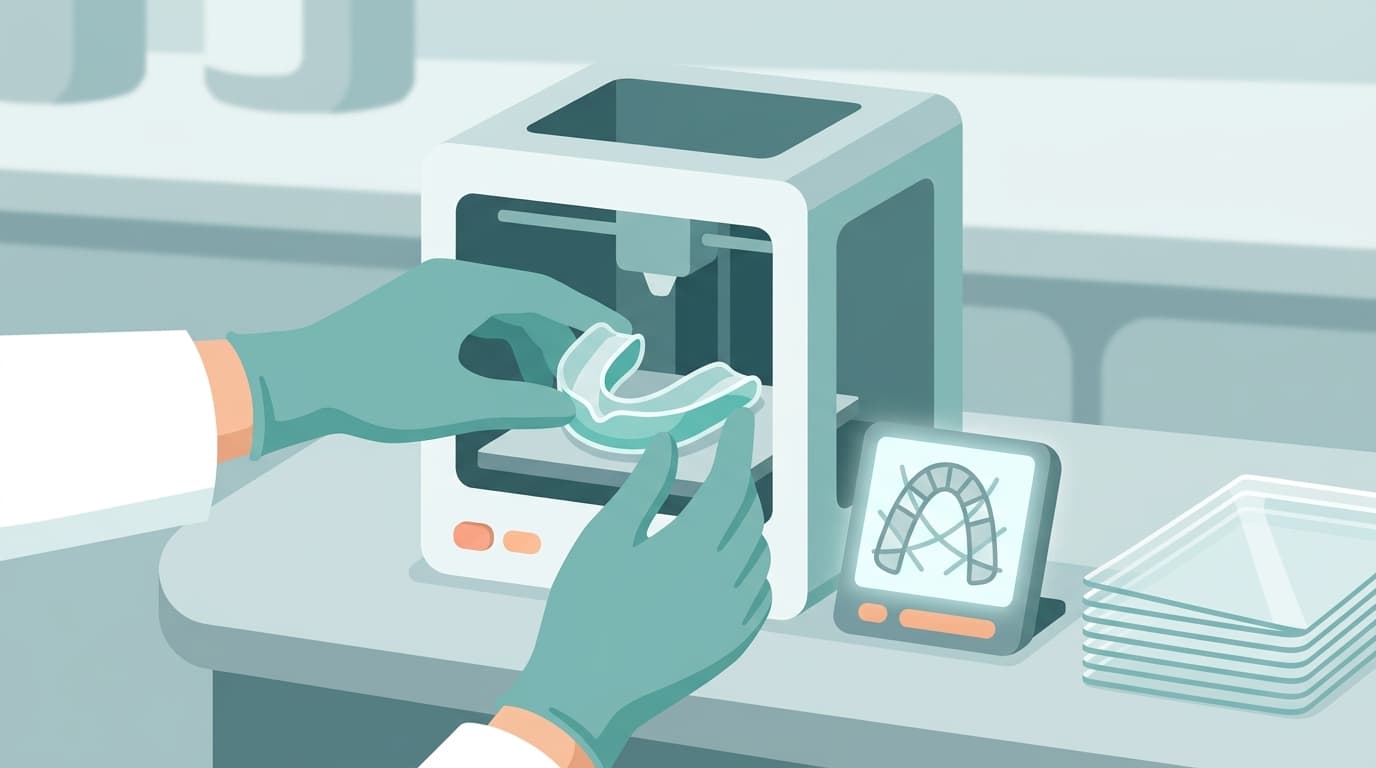
Mouthguards, which protect against broken or knocked-out teeth during sports, have traditionally been made by taking an alginate impression of the mouth at the dentist, casting a plaster model from it, and then heat-pressing an EVA (ethylene-vinyl acetate) sheet over that model. Over the past two years, intraoral scanners and 3D printing have begun entering this production process. A study that had amateur athletes make mouthguards using both methods and alternate between them for three months each found that impression time and discomfort dropped, but the fit of the finished mouthguard did not improve to the same degree. Going a step further, experiments that try to 3D-print the mouthguard material itself found that impact resistance varied greatly depending on the material and printing method.
The Impression Method Changes First
In the conventional method, alginate is pressed into the mouth to take an impression, plaster is poured into that impression to make a model, and an EVA sheet is then vacuum-formed over the model to shape the mouthguard. Many athletes reported feeling the impression material slide toward the back of the throat or having trouble breathing during this process. In fact, more than half of the athletes in this study who had used a mouthguard before said they had used an over-the-counter "boil-and-bite" version that required no dental impression at all, which suggests they may have been avoiding the impression-taking process at the dentist in the first place.
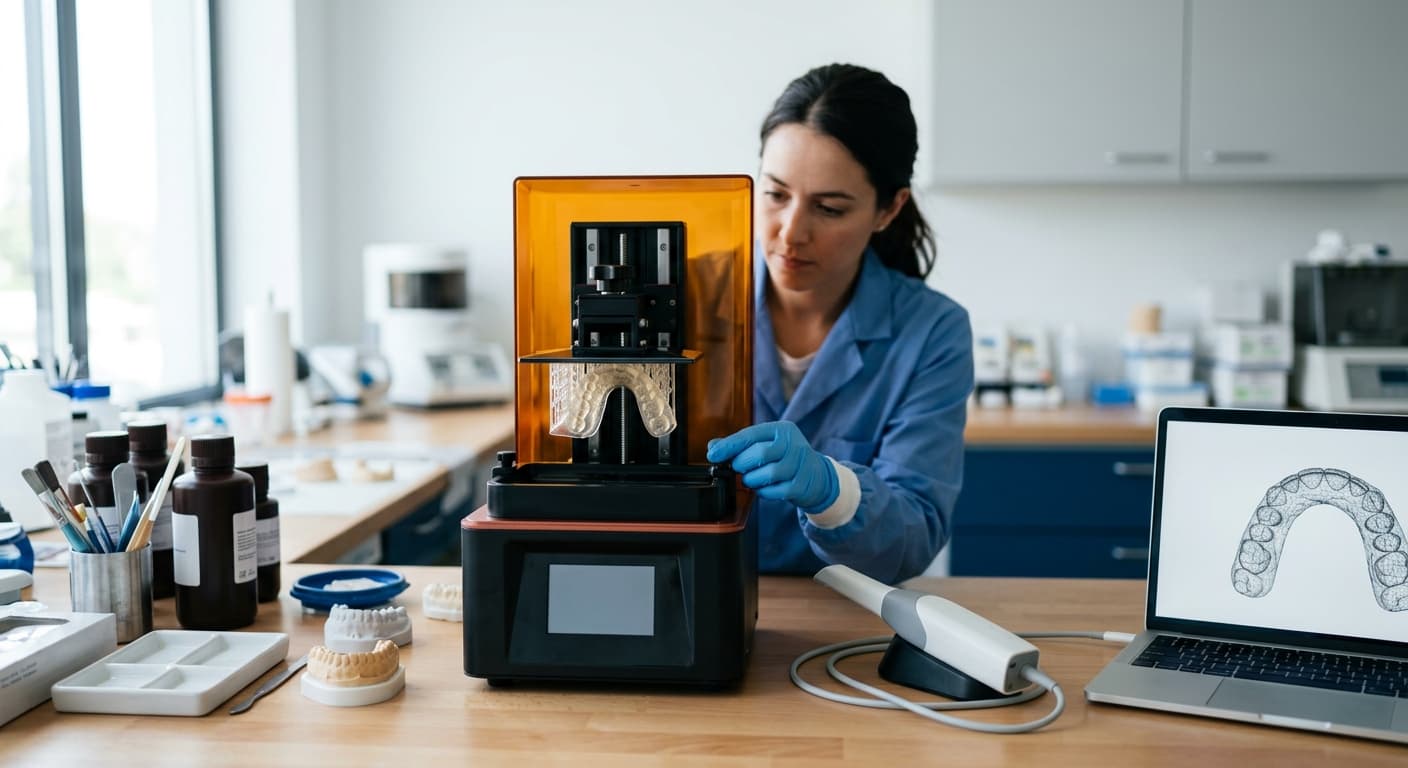
The digital method reverses this order. An intraoral scanner captures the tooth arrangement as a file, a 3D printer uses that file to produce a resin model, and the same EVA sheet is then pressed over it to finish the mouthguard. The material remains EVA either way, and only the path used to obtain the model changes. Athletes reported that the digital impression took less time than the handmade one (5 minutes 46 seconds versus 10 minutes 5 seconds) and that they felt less stuffiness, anxiety, gagging, breathing difficulty, and unpleasant taste. Pain did not differ between the two methods.
But the results flipped once the finished mouthguards were compared. More athletes reported a better fit for the mouthguard made from the handmade model, and the one made from the digital model showed a wider gap between the inner surface and the teeth. Discomfort right after wearing it was lower for the digital version, but after a week the pattern reversed and discomfort became greater for the digital version instead. In other words, while digital impressions were more comfortable to take, the finished mouthguard, which has to be worn for weeks, still hasn't fully caught up with the handmade version.
Attempts to 3D-Print the Mouthguard Itself
Experiments are also emerging that try to 3D-print the mouthguard material itself rather than just the model. Two candidate methods have been put to the test: vat photopolymerization (SLA/DLP), which cures resin layer by layer with light, and fused deposition modeling (FDM), which melts filament and builds it up layer by layer.
In drop-impact testing, the thermoformed EVA mouthguard's structure failed on the very first impact, while the 3D-printed resin mouthguards (Keyguard and Dima) held their shape even after five consecutive impacts to the same spot. However, the force transmitted through the material was actually higher for the 3D-printed versions (255-299g on a peak-acceleration basis). Neither the thermoformed nor the 3D-printed mouthguards met the French standard the mouthguard industry references (NF S72-427: average below 230g, individual impacts below 250g). This means the 3D-printed versions had the edge specifically in withstanding repeated impacts without breaking down.
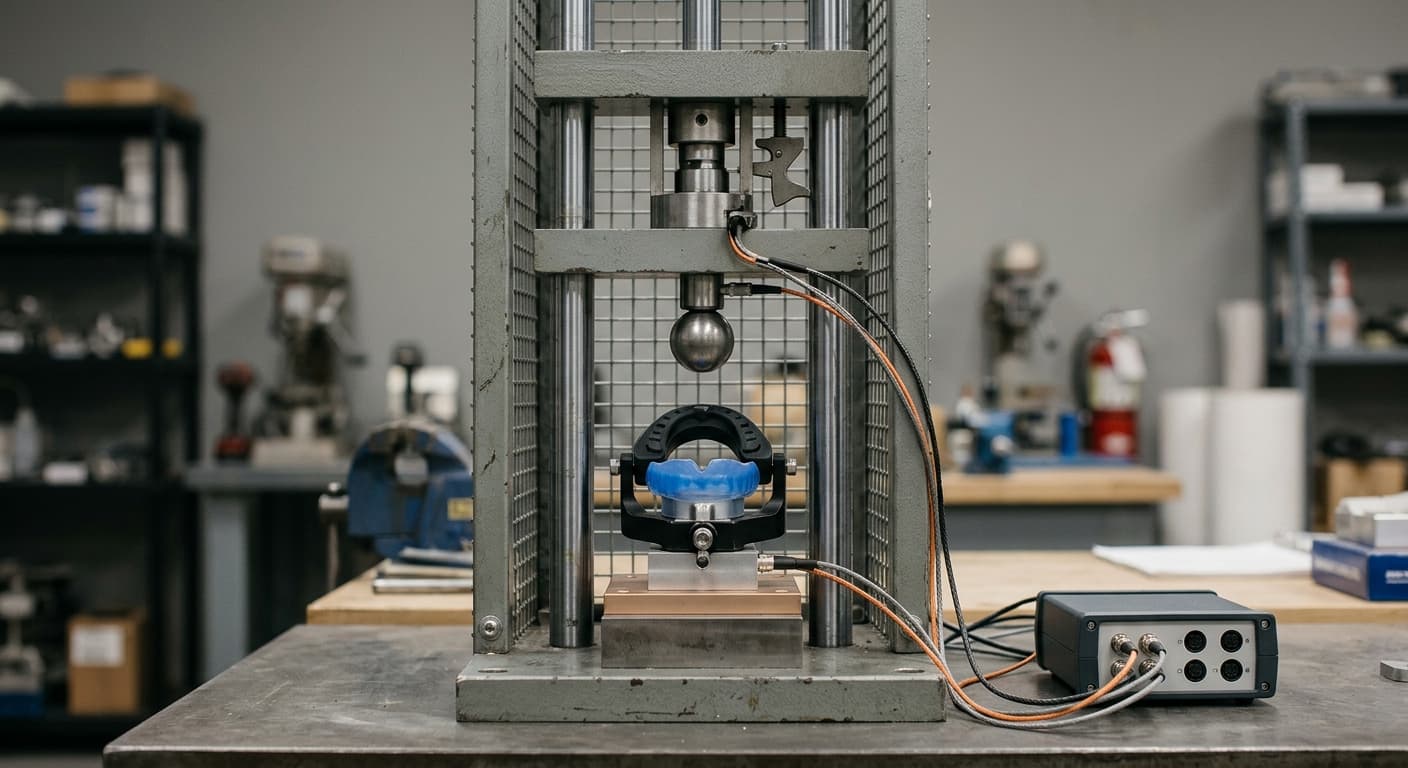
Which material and printing angle were used also changed the outcome. In an experiment that varied the DLP printing angle from 0 to 50 degrees, specimens printed at a 10-degree tilt transmitted the weakest impact force over the longest duration. In another experiment comparing FDM and SLA, printing TPU (thermoplastic polyurethane) with FDM showed better impact-absorption performance than EVA or SLA resin under the same conditions. Similar results were confirmed repeatedly in other experiments.
Still Short of the Standard
Taken together, the results so far show that 3D printing has reduced the discomfort of taking a mouthguard impression, but it still hasn't fully replaced the handmade method when it comes to how well the finished mouthguard fits. On the side of 3D-printing the mouthguard material itself, no material yet meets the international standard, but unlike the thermoformed version, which breaks after a single impact, it holds its shape under repeated impacts, pointing to potential as a cost-effective alternative for growing athletes who need to replace their mouthguards often. Just as 3D-printed dentures have shown mixed results against traditional methods depending on the measure, it's still too early to say either approach is fully superior for mouthguards as well.