Question
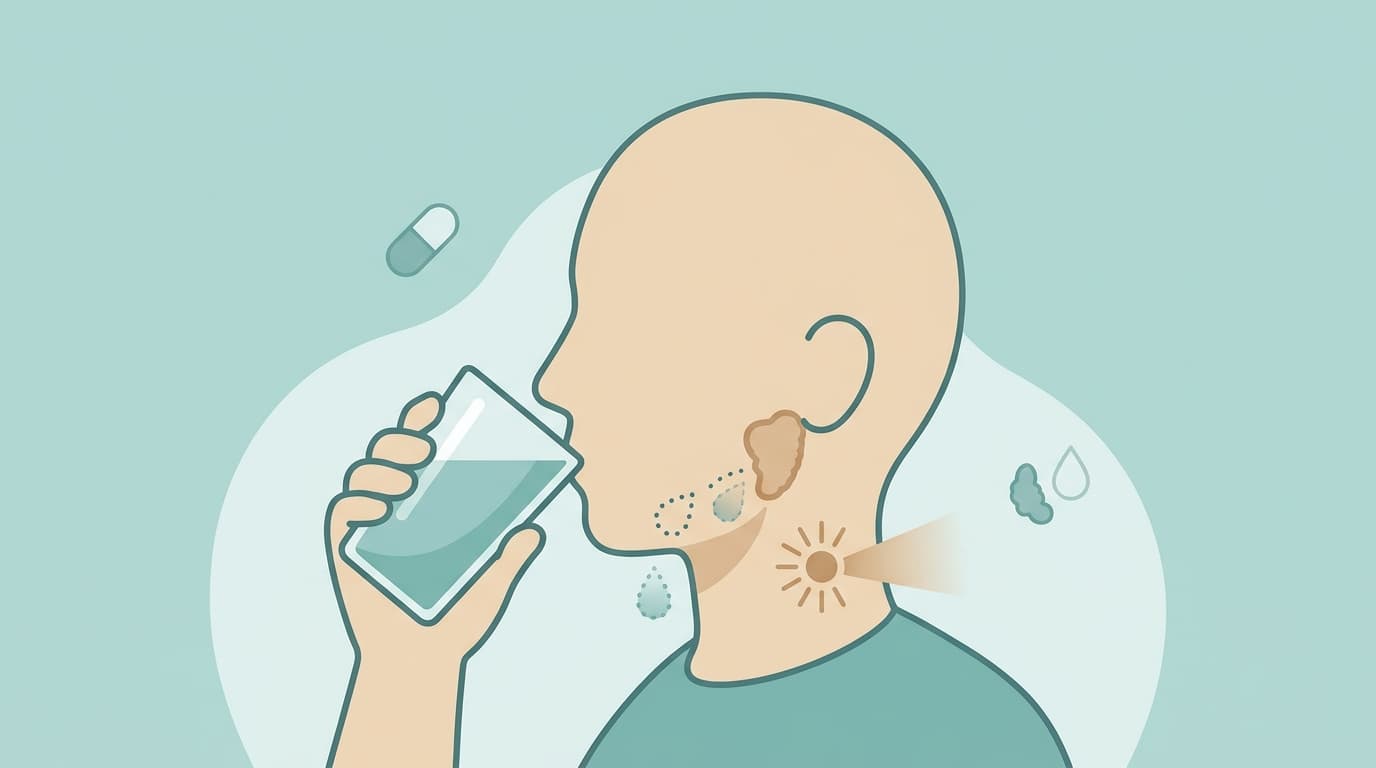
Even though I keep drinking water, my mouth quickly feels dry and uncomfortable again. I've been brushing more carefully than usual and have tried products like mouthwash and moisturizing sprays, but nothing has helped much. I'd like to know why this happens and what my dentist should check.
Short Answer
If dry mouth persists even after drinking water, the first possibility to consider is not simple dehydration but hyposalivation (dry mouth from reduced saliva production itself), where the amount of saliva your body makes has actually dropped. The cause varies from person to person: if you're taking medication, that medication may be responsible; if you've recently had radiation therapy to the head and neck area, that treatment may be the cause; and if you have no such history, a disease of the salivary glands themselves, such as Sjögren's syndrome, may be involved. Because reduced saliva significantly changes how quickly and how widely cavities form, it's important to identify the cause and have your dentist assess your cavity risk.
Why Does This Happen?
Causes of Reduced Saliva
Dry mouth doesn't have a single fixed cause. It helps to think of it in three categories, medications, radiation therapy, and systemic disease, and match them against your own situation.
The most common cause is medication. More than 1,000 drugs, including antidepressants, diuretics (which increase urine output), blood pressure medications, antihistamines (allergy medications), and opioid painkillers, can cause reduced saliva as a side effect. One report notes that among 200 medications commonly prescribed to older patients, about 63% list dry mouth as a side effect. Taking several such medications together can compound the effect and make it worse. If you're taking medication, it's safer not to stop or reduce it on your own; instead, check with the prescribing doctor or your dentist to identify which drug is responsible.
Head and neck radiation therapy can also significantly reduce salivary gland function. Its effect can be fast and severe enough that rapidly progressing cavities can appear within 3 months of starting treatment.
If dry mouth persists without any history of medication use or radiation therapy, a systemic disease that reduces salivary gland function itself, such as Sjögren's syndrome, may be worth considering. In this case, identifying the cause requires both dental care and an internal medicine evaluation.
Why Reduced Saliva Raises Cavity Risk
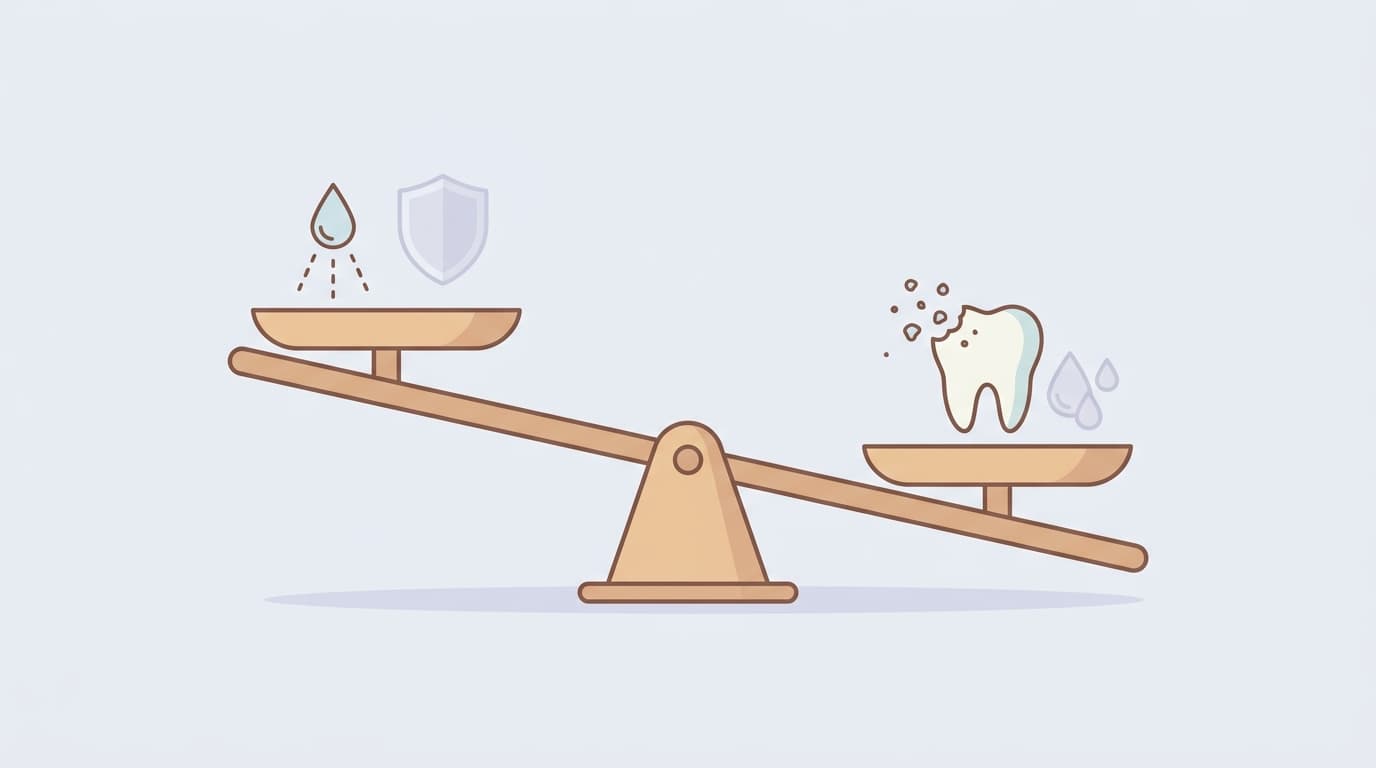
Saliva doesn't just keep the mouth moist. It also performs a self-cleansing function that washes away food debris and bacteria, a buffering function that keeps the mouth from turning acidic, and a remineralizing function that restores calcium and phosphate to tooth surfaces that acid has dissolved. When saliva decreases, all three of these weaken at once.
Salivary pH is an indicator of whether this balance has broken down. The normal range is above 6.8; 6.0 to 6.6 is considered intermediate, and below 5.8 the mouth becomes acidic enough for cavity-causing bacteria to multiply easily. If this state continues, remineralization of tooth surfaces that acid has dissolved can barely occur, which can lead to rampant caries, where cavities form on multiple teeth at once and progress quickly.
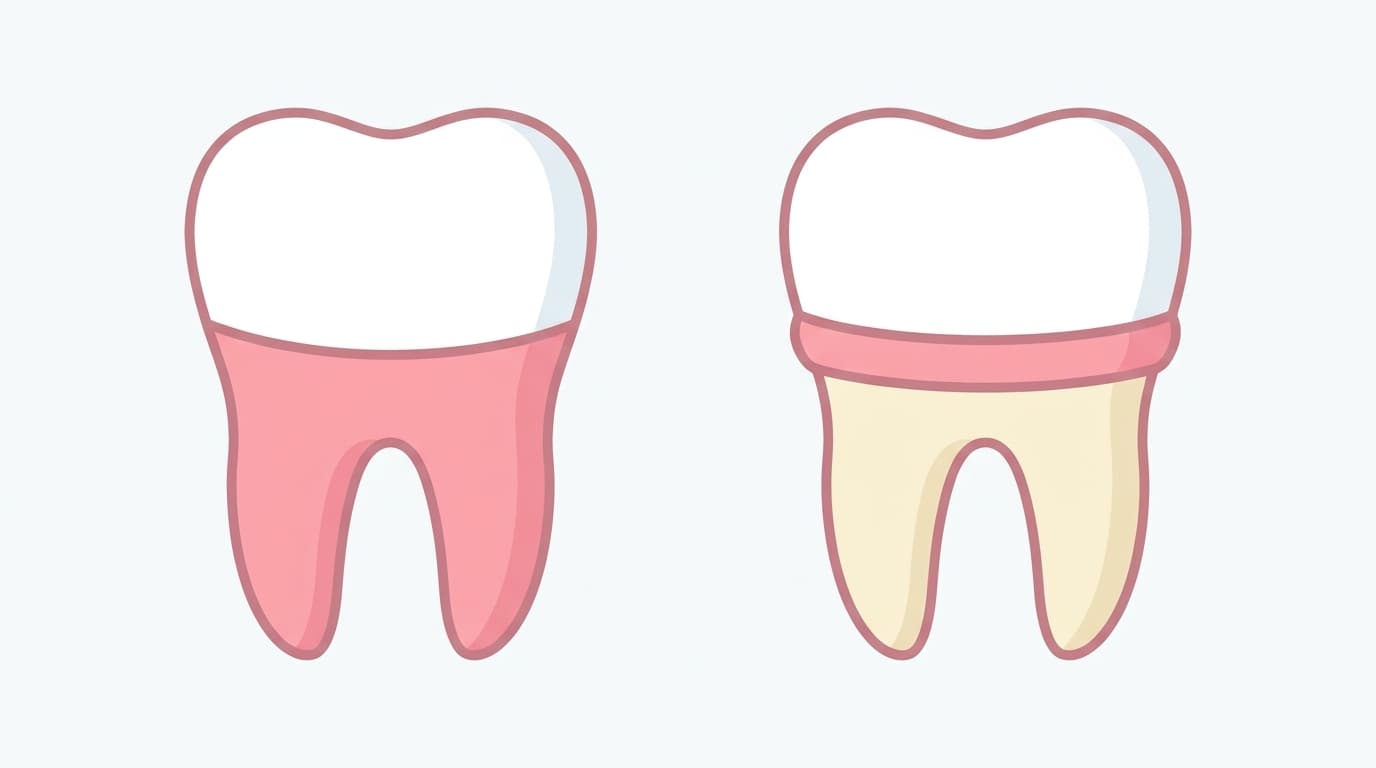
Areas where the gums have receded and exposed the tooth root surface are especially vulnerable. The dentin covering the tooth root begins to dissolve at a milder acidity (critical pH 6.2) than enamel, which only begins to dissolve under stronger acidity (critical pH 5.5). So even a mild acidic shift in the mouth from reduced saliva damages the root surface first, and it is reported to progress about twice as fast as cavities on the tooth crown. In fact, root caries is common enough to appear in 38% of people aged 55 to 64 and 47% of those aged 65 to 74, making it an area that especially deserves attention for older adults or those with dry mouth.
What Your Dentist Can Check and Help With
Dentists use a process called caries risk assessment to evaluate risk by looking at both factors that promote cavities (bacteria, sugar intake, reduced saliva flow, and so on) and factors that protect against them (fluoride exposure, the buffering capacity of saliva, and so on). A simple salivary pH test can also be used to gauge how much your saliva's buffering capacity has dropped. Telling your dentist in advance about medications you're taking, any history of radiation therapy, and diagnoses such as Sjögren's syndrome greatly helps this assessment.
If your risk comes back high, your dentist may shorten your checkup interval to something like every 3 months, apply fluoride varnish or prescribe a high-concentration fluoride toothpaste, and take radiographs every 6 to 12 months to catch interproximal cavities that are hard to see. Early white-spot lesions can be treated with topical or ingestible agents that supply calcium and phosphate to aid remineralization, and to keep the mouth comfortable, xylitol gum, baking-soda rinses, or oral moisturizers may also be recommended. If symptoms are severe, you may be prescribed medication that increases the actual amount of saliva produced, but this is a decision that must take the underlying disease and overall health into account, requiring the joint judgment of your dentist and the prescribing physician.